Best STEM Toys for Future-Ready Kids (Screen-Free, Open-Ended)
Ant ErwinHow do you prepare your child for a future you can't predict?
Automation, AI, and technology are reshaping industries at an accelerating rate.
The World Economic Forum says 65% of today's kids will work in jobs that don't exist yet. The most in-demand workplace skills won't be what schools teach now - they'll be creativity, collaboration, and adaptability.
Traditional schools focus on test scores and memorization. Screens offer easy peace but leave you feeling guilty. You watch your child scroll and wonder if they're building the innovative problem-solving and critical thinking the future will actually demand.
Here's what research shows.
Open-ended play with hands-on STEM toys builds exactly these soft skills: creative thinking, collaboration, and adaptability through trial and error, not apps or worksheets.
The best STEM toys, like Superspace's building sets, give you guilt-free downtime while your kids develop future-ready skills through screen-free play. You're not just buying a toy. You're making a choice that prepares them for whatever tomorrow brings.

Key Takeaways
- The World Economic Forum identifies analytical thinking, creative thinking, resilience, and technological literacy as top skills for 2030, all of which can be nurtured through open-ended play with STEM toys.
- Research from the American Academy of Pediatrics shows that imaginative, child-led play strengthens executive function, self-regulation, language development, and social skills.
- The best STEM toys for future-ready kids are open-ended, durable, and screen-free, such as magnetic building panels, construction kits, and loose parts that encourage unlimited creativity.
- Open-ended STEM toys build core future-ready skills, including creative problem-solving, collaboration, resilience through trial and error, spatial reasoning, and healthy technology habits.
- Parents and educators can use guided play techniques by letting children lead the build while asking open-ended questions like "What do you think will happen if we try this?"
- Age-appropriate play prompts help children develop progressively: simple builds and story-based challenges for ages 3-5, engineering tests for 6-9, and timed design sprints for 10-12.
- Balancing screen time with hands-on STEM play teaches children to use AI and digital tools as helpers for brainstorming, not replacements for creative thinking and building.
Table of Contents
- Why Future-Ready Skills Matter Now
- The Science of Imaginative/Open-Ended Play
- The Best STEM Toys Are Open-Ended
- Core Future-Ready Skills Built Through STEM Toys
- Play Frameworks Parents/Educators Can Use
- Age-Banded Play Prompts
- Quick Parent Checklist: Is My Child Building Future-Ready Skills?
- FAQs
- The Power of Play-Based Learning
- References
Why Future-Ready Skills Matter Now
The jobs of 2030 won't look like the jobs of today.
The World Economic Forum's latest Future of Jobs Report identifies analytical thinking, creative thinking, resilience, flexibility, and technological literacy as the top skills employers will need [1].
Here's the challenge. Traditional education still emphasizes memorization and standardized testing, approaches that prepare kids for yesterday's world, not tomorrow's workplace.
Children need skills that can't be automated. They need to solve problems no one has encountered before, collaborate with diverse teams, adapt when plans fail, and use technology wisely without becoming dependent on it.
The good news is that these future-ready skills aren't taught through worksheets or lectures. They're built through hands-on, open-ended play with STEM toys that let children experiment, fail, rebuild, and discover their own solutions.
When a child spends an hour building a fort from magnetic panels, testing different configurations, and problem-solving when walls collapse, they're practicing the exact skills the World Economic Forum says matter most.

The Science of Imaginative/Open-Ended Play
The American Academy of Pediatrics doesn't just recommend play for fun. In their landmark 2018 clinical report "The Power of Play," pediatricians are encouraged to prescribe play as essential medicine for child development [2].
The research is clear.
Open-ended, imaginative play strengthens executive function, the mental processes that control planning, focus, and self-regulation.
It builds language skills as children narrate their creations and negotiate roles with playmates. It develops emotional regulation when kids work through frustration during challenging builds.
Dr. Angeline Lillard's comprehensive review of pretend play research found that child-led, open-ended play significantly improves creativity and flexible thinking, the ability to see multiple solutions to the same problem [3].
Physical play matters too. Diamond's research on executive functions shows that active, playful tasks strengthen working memory and cognitive flexibility better than sedentary activities [4].
Fort-building and large-scale construction with STEM toys like magnetic panels uniquely combines all these benefits. It's physical, requiring gross motor movement and spatial planning. Hands-on learning engages children in ways passive screen time never can.
It's imaginative, transforming simple panels into castles, spaceships, or hideouts. And it's open-ended, with no single right answer, forcing children to think creatively and adapt their designs as they build.

The Best STEM Toys Are Open-Ended
Not all STEM toys build future-ready skills equally.
The most effective ones share five characteristics: they're open-ended with no predetermined outcome, durable enough for repeated experimentation, intuitive so kids can start without lengthy instructions, age-safe with appropriate challenge levels, and screen-optional to encourage hands-on thinking.
Open-ended STEM toys fall into several categories. Magnetic building panels let children create structures limited only by imagination, from simple geometric shapes for toddlers to complex architectural designs for tweens.
Construction kits with modular pieces encourage engineering thinking and iterative design. Loose parts like cardboard tubes, fabric squares, and wooden blocks become whatever children need them to be.
Simple circuit add-ons introduce basic electronics and cause-and-effect relationships without overwhelming young learners.
Here's what separates premium STEM toys from basic ones.
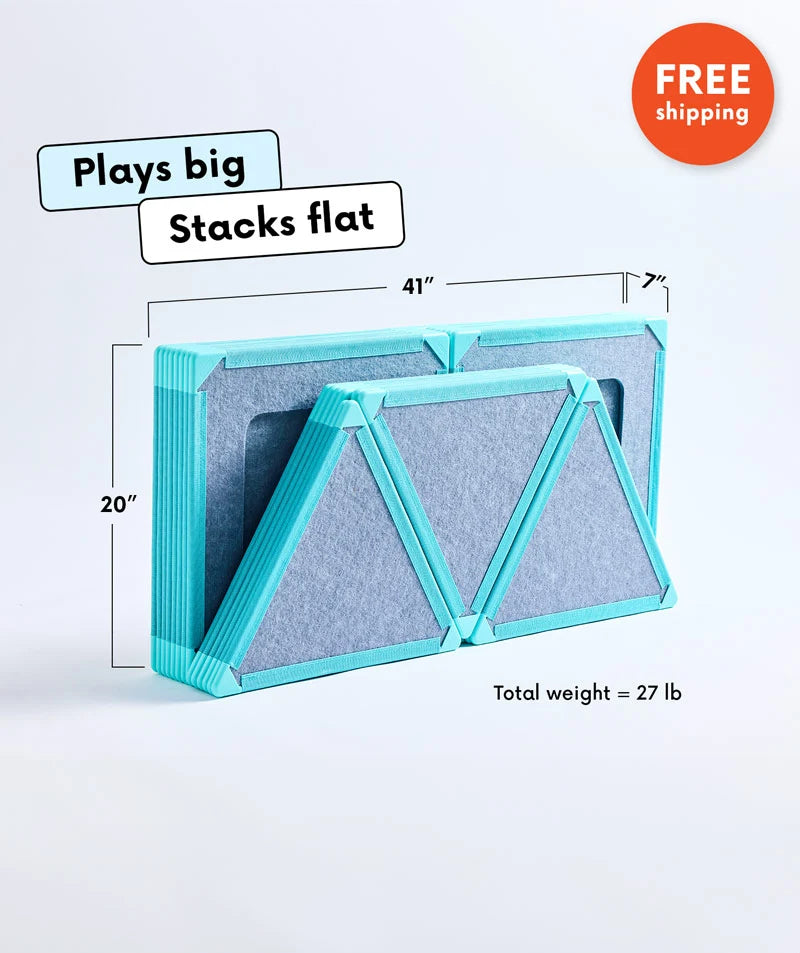
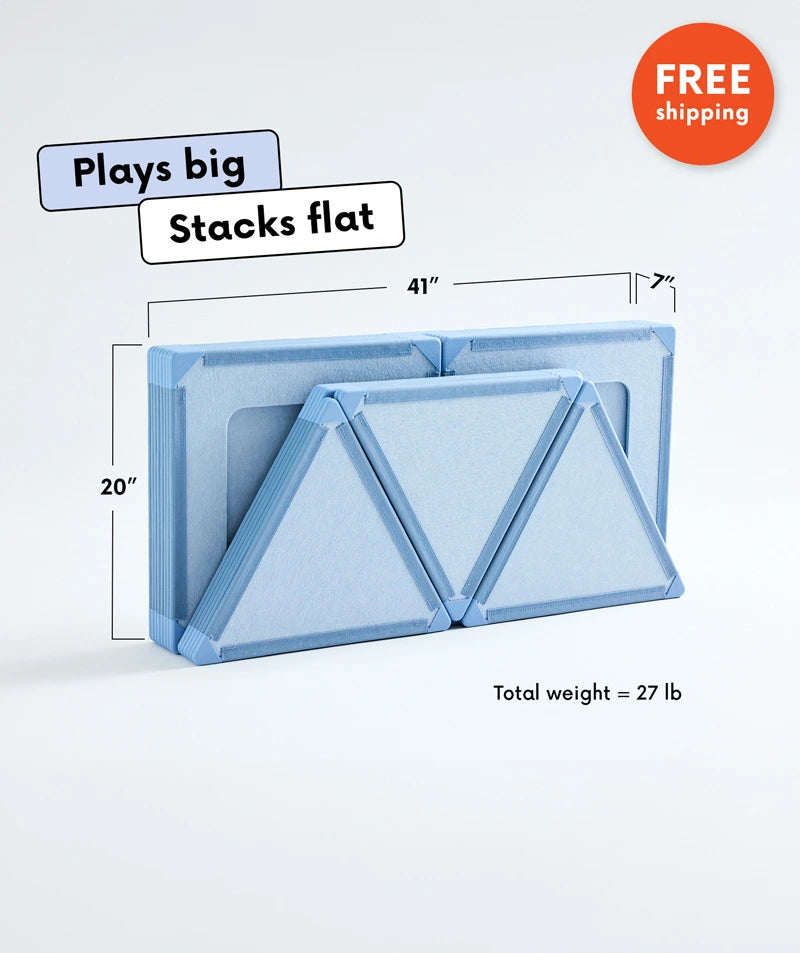
Superspace's magnetic building sets exemplify the open-ended approach with large, sturdy panels that support full-body play and fort-building at scale.
Unlike small desktop toys, these panels invite gross motor movement and collaborative builds, engaging multiple children simultaneously. The magnetic connections are intuitive enough for three-year-olds yet stable enough for complex ten-year-old designs.
The key is avoiding toys with only one solution or fixed outcomes. A kit that builds exactly three predetermined models teaches following directions, a useful skill but not a future-ready one.
A set of magnetic panels that can become infinite creations teaches problem-solving, spatial reasoning, and creative thinking, skills no robot can replicate.

Core Future-Ready Skills Built Through STEM Toys
Creative Thinking & Problem-Solving
Every time a child asks, "What else could this be?" they're practicing divergent thinking, the ability to generate multiple solutions. '
Open-ended STEM toys naturally prompt this question with every build.
When a magnetic panel structure wobbles, children must diagnose why, test solutions, and try again. This trial-and-error process builds problem-solving resilience that transfers to academic challenges and real-world obstacles.
Collaboration & Communication
Fort-building requires negotiation. Whose design will they follow? Who holds the base while someone adds the roof? How do they divide the panels fairly?
These social challenges teach children to articulate ideas, listen to others, compromise when needed, and celebrate shared success. Research shows collaborative play strengthens communication skills and emotional intelligence in ways solitary activities cannot [3].
Resilience & Adaptability
The fort collapsed. The tower leans too far. The design that worked yesterday doesn't fit today's vision.
Open-ended STEM toys teach children that failure isn't final. It's information. With every rebuild, kids learn to persist through frustration, adapt their approach, and view obstacles as puzzles to solve rather than reasons to quit.
This resilience, the ability to bounce back and try differently, ranks as one of the World Economic Forum's top future-ready skills for good reason [1].
Spatial Reasoning & STEM Literacy
Building three-dimensional structures develops spatial awareness, the ability to visualize objects from different angles, and predict how pieces fit together. This skill underpins mathematics, engineering, architecture, and even surgery.
Children learn fundamental physics through play. Heavier bases create stability. Triangular bracing strengthens structures. Larger surface areas distribute weight. These aren't lessons from a textbook. They're discoveries from hands-on experimentation.
AI/Digital Literacy Starter
Future-ready kids won't avoid technology. They'll use it wisely.
The goal isn't screen-free childhood but teaching children to use AI and digital tools as assistants for brainstorming, not replacements for creative work.
When children ask a voice assistant for fort-building ideas, then spend an hour building and improving those ideas offline, they're learning the balance: technology sparks inspiration, human hands create reality.

Play Frameworks Parents/Educators Can Use
The Guided Play Formula
Dr. Deena Weisberg's research on guided play offers a practical framework. Let the child lead the activity while you ask open-ended questions that deepen learning without taking over [6].
Instead of saying "Build it this way," ask "What do you think will happen if we move this panel?" Instead of fixing a wobbly structure, ask, "Why do you think it's leaning? What could make it stronger?"
These questions activate critical thinking without removing the child's ownership of the project. The child stays in charge. You're the supportive coach, not the director.
Setting Up a Home "Future Lab"
Create a dedicated space for open-ended building. Gather your STEM toys (magnetic panels, building kits, loose parts) in easy-reach bins.
Add design challenges on index cards: "Build a tower that can support a book on top," or "Create a fort using only 10 pieces." Include timers for sprint-building sessions and a safe crash space where ambitious towers can fall without damage.
Rotate materials monthly to maintain novelty. This week, add fabric and clips for fort roofs. Next month, introduce simple circuits or flashlights for engineering challenges.
Classroom & Club Centers
Educators can set up rotating STEM centers. One station focuses on free building. Another offers structured design challenges with constraints ("Use only squares today" or "Build something taller than you").
A third combines building with storytelling, where children construct settings for their narratives. Document builds with photos and let children present their creations, practicing communication skills alongside engineering thinking.
Screen/AI Balance Strategies
Establish a simple rule: screens for ideas, hands for creation. Children can ask ChatGPT for fort design inspiration or watch a 3-minute YouTube tutorial on tower-building techniques.
Then screens go away, and the real work begins. Set a timer for 30 minutes of uninterrupted hands-on building.
This approach teaches kids that AI is a brainstorming partner, not a substitute for their own creativity and effort. They learn to evaluate AI suggestions critically, take what's useful, and improve through physical experimentation. Learn more strategies for reducing screen time while building developmental skills.
Age-Banded Play Prompts
Looking for more ideas? Explore our guide to 40+ hands-on STEM activities you can try at home or in the classroom.
Ages 3-5: Building the Foundation
Young children benefit from simple, success-oriented challenges. Provide large magnetic shapes and ask them to build something for a favorite stuffed animal, a house, a car, or a hiding spot.
Use story-based prompts: "Can you build a cave for the bear?" or "What could the dinosaur climb on?"
Ask questions that develop spatial reasoning: "How can we make this taller?" or "What happens if we add this piece here?" Keep sessions short, 15-20 minutes, celebrating effort and creativity over perfection.
Ages 6-9: Testing & Iterating
Children in this age range can handle engineering challenges. Ask them to build the tallest tower possible, then test its stability by gently pushing from different sides.
Challenge them to create the tallest structure using only 20 panels, or design a fort with multiple rooms and a secret entrance.
Introduce collaborative missions where siblings or classmates must work together, assigning roles like architect (plans the design), builder (assembles pieces), and tester (checks stability).
After builds, ask reflection questions: "What worked well? What would you change next time? Why did some parts collapse?"
Ages 10-12: Design Thinking & Constraints
Older children thrive with complex challenges and constraints. Have them sketch a blueprint before building, planning dimensions and panel counts.
Set time-boxed design sprints, 20 minutes to build the strongest possible structure, then peer-test each creation.
Add simple circuits or flashlights to builds, integrating basic electronics. Challenge them to minimize material use while maximizing size or to redesign yesterday's fort with only half the panels.
Encourage them to explain their thinking process: "Why did you choose this base design? How did you decide where to add bracing?"
This metacognition, thinking about thinking, strengthens problem-solving skills and self-awareness.

Quick Parent Checklist: Is My Child Building Future-Ready Skills?
Use these five questions to assess whether your child's playtime is developing future-ready competencies:
Creativity: Does your child try new designs or variations at least once a week, or do they build the same structure repeatedly without experimentation?
Problem-Solving: When a build fails or doesn't work as planned, does your child test different solutions without melting down, or do they give up immediately when frustrated?
Collaboration: During group play, does your child share materials willingly, take turns leading and following, and listen to others' ideas, or do power struggles dominate?
Resilience: After a fort collapses or a structure wobbles, does your child rebuild with adjustments, or do they abandon the project entirely?
Technology Sense: If your child uses AI or online tools for inspiration, do they then build and improve those ideas offline, or do they stay on screens instead of creating hands-on?
If you answered positively to 3-4 questions, your child is developing strong future-ready skills. If you answered positively to all five, they're thriving.
FAQs
What are the best STEM toys for kids?
The best STEM toys are open-ended and screen-free, including magnetic building panels, modular construction kits, loose parts (cardboard, fabric, blocks), and simple circuit add-ons. Look for toys that have no single solution and encourage experimentation.
How do STEM toys build future-ready skills?
STEM toys develop analytical thinking, creativity, resilience, and collaboration through hands-on problem-solving. When children design, build, test, and rebuild, they practice the exact skills employers will value in 2030: adapting to failure, generating new solutions, and working in teams [1].
What are the best open-ended toys to pair with STEM toys?
Combine building sets with loose parts like fabric for fort roofs, cardboard tubes for tunnels, and wooden blocks for foundations. Add design challenge cards and timers for structured creativity within open-ended play.
How can I teach AI literacy without more screen time?
Use the "screens for ideas, hands for creation" rule. Let children ask AI for building inspiration or watch brief tutorials, then turn screens off for hands-on construction. This teaches kids to use technology as a brainstorming tool, not a replacement for creative work.

The Power of Play-Based Learning
The future belongs to creative problem-solvers, resilient collaborators, and thoughtful technology users. These aren't skills children learn from textbooks or apps.
They're built through the messy, joyful, sometimes-frustrating process of open-ended play with STEM toys.
The research is clear [2, 3, 4, 6].
When you hand your child a set of magnetic panels and step back, you're not just providing entertainment. You're equipping them with the analytical thinking, creativity, and adaptability they'll need for careers we can't yet imagine.
Ready to get started? Explore Superspace's magnetic building sets designed for open-ended, screen-free play that grows with your child.
This week, try a simple design challenge with your child. Build together, ask questions, celebrate failures as learning, and watch future-ready skills emerge through play.
References
- World Economic Forum. (2025). Future of Jobs Report 2025. https://www.weforum.org/publications/the-future-of-jobs-report-2025/
- Yogman, M. et al. (American Academy of Pediatrics Clinical Report). (2018). The Power of Play: A Pediatric Role in Enhancing Development in Young Children. Pediatrics, 142(3):e20182058. https://doi.org/10.1542/peds.2018-2058
- Lillard, A. S., Lerner, M. D., Hopkins, E. J., Dore, R. A., Smith, E. D., & Palmquist, C. M. (2013). The impact of pretend play on children's development: A review of the evidence. Psychological Bulletin, 139(1), 1–34. https://doi.org/10.1037/a0029321
- Diamond, A. (2014). Executive functions. Annual Review of Psychology, 64, 135–168. https://doi.org/10.1146/annurev-psych-113011-143750
- Schranz, N., Olds, T., Cliff, D., et al. (2014). Physical activity and children's cognitive outcomes: A systematic review. Sports Medicine, 44, 1189–1203. hhttps://pubmed.ncbi.nlm.nih.gov/26197943/
- Weisberg, D. S., Hirsh-Pasek, K., Golinkoff, R. M., Kittredge, A. K., & Klahr, D. (2016). Guided play: Principles and practices. Current Directions in Psychological Science, 25(3), 177–182. https://doi.org/10.1177/0963721416645512