Too Many Toys Stunt Kids' Creativity and Focus: Here's the Science-Backed Fix
Craig SpencerToo many toys aren't just cluttering your home. They're quietly stunting your child's creativity, focus, and emotional growth. Research shows toy overload shrinks attention spans, fuels sibling conflict, and replaces deep imaginative play with restless flitting.
Birthdays, holidays, and well-meaning relatives make it worse. Every new gift could push your child further from the focused, creative play their brain craves.
But there's hope.
What if one transformative play system could replace dozens of scattered toys?
Superspace's life-sized building panels spark the hours of imaginative engagement your child needs, without the clutter.
Here's your research-backed reset you can use any time of year.

Key Takeaways
- Toy overload shortens attention spans and limits imaginative play, while fewer options extend focus.
- Clutter contributes to sibling conflict, anxiety, and decision fatigue year-round.
- A four-step reset (inventory, sort, rotate, and communicate boundaries) restores calm quickly.
- Experiential gifts and modular, open-ended play systems keep creativity high with less clutter.
- Sustainable criteria and kid-led maintenance habits prevent the toy pile from creeping back.
Table of Contents
- Why Toy Overload Sneaks Up on Caring Parents
- How Excess Toys Undermine Developmental Growth
- Spot the Signs Your Child Has Too Many Toys
- A 4-Step Toy Reset Before New Gifts Arrive
- Why One Transformative Play System Beats Dozens of Scattered Toys
- Sustainable Toy Choices That Earn Their Place
- Empower Kids to Maintain a Calm Play Space
- Frequently Asked Questions About Toy Overload
- The Power of Intentional Play
- References
Why Toy Overload Sneaks Up on Caring Parents
Retail calendars push out new releases long before families have recovered from the last holiday spree. Seasonal promotions, loyalty perks, and viral trends keep the toy conveyor belt moving whether you planned for it or not.[4]
When too many toys accumulate, most parents don't realize it happened overnight.
Well-meaning relatives often equate generosity with a larger pile under the tree. They rarely see the aftermath when you are the one stepping on blocks at 6 a.m.[4]
Secondhand swaps, yard sales, and Buy Nothing groups can double the volume. The dopamine hit of a “free” or discounted find adds to storage without checking whether it fills a gap in play.
Parents juggling hybrid work and childcare lean on quick distractions to buy time between meetings. Those survival decisions stack up invisibly until every surface is covered.[3]
Even school fundraisers and birthday party goody bags contribute to the creep. A single month of events can deliver more trinkets than your storage bins can handle.

How Excess Toys Undermine Developmental Growth
The developmental cost of toy overload goes far beyond messiness. When children face constant choice, their brains cannot build the deep focus pathways essential for learning and creativity.[1]
Research reveals a troubling pattern:
Kids surrounded by too many options skim the surface of each toy and walk away less satisfied, never developing the sustained attention that builds problem-solving skills.[1]
This isn't just about play quality. It's about brain development during the critical early years.
Cluttered play environments trigger sensory overload that manifests as irritability, meltdowns, and emotional dysregulation.[6]
What looks like behavioral issues is often a child's nervous system crying for simplicity.
The hidden opportunity cost hurts too.
Mountains of toys consume square footage you could dedicate to gross motor movement, reading nooks, or calm-down corners that genuinely support emotional regulation and learning.[3]
Child development experts warn that excessive choice short-circuits the decision-making process that leads to flow states:
Those magical hours when kids lose themselves in imaginative worlds.[6]
Too many toys steal those transformative play experiences.
When families trial toy fasts for even one week, they report dramatic improvements: longer attention spans, reduced sibling conflict, and children rediscovering toys they'd ignored for months.[2]
The relief is immediate.
Focus, Creativity, and Play Quality Take a Hit
Toddlers offered four toys during free play, explored each one for longer stretches, and tried more creative uses than peers surrounded by sixteen choices.[1]
With fewer distractions, children invent new games, build richer stories, and develop fine motor control as they repeat actions without constant novelty.[1]
Parents often notice preschoolers returning to classic building sets or pretend play props when shelves feel spacious, reinforcing the idea that boredom can be productive.[3]
Open-ended materials such as magnetic tiles, wooden animals, and modular fort panels support this depth. Kids apply one set of pieces to multiple storylines instead of chasing every new gadget.
When you reduce the number of toys on display, teachers and therapists find it easier to scaffold play skills that build executive function.[1]

Emotional Regulation and Family Harmony
Decision fatigue shows up as flitting between toys, tantrums that erupt during cleanup, or kids begging for something new minutes after opening a gift.[6]
Toy clutter escalates sibling conflict faster. Multiple siblings competing for attention in a cluttered zone struggle to focus.[3]
Too many interchangeable toys reduce perceived value, so arguments over sharing increase while gratitude drops.
Parents feel the pinch too. When bins overflow, tidy-up routines take longer, leaving less energy for bedtime rituals and connection.[6]
Kids with sensitive sensory systems may shut down entirely. They disengage from playdates or prefer screens because physical toys feel like too much to process at once.[6]
Conversely, a curated set encourages cooperative storytelling. Children learn to negotiate roles and share props because each piece matters.
Environmental and Financial Ripple Effects
Toy sales surge during holiday seasons worldwide. An Australian report showed households there spending over AU$3.7 billion annually on new toys, a pattern that mirrors excessive spending in the United States.[4]
Plastic-heavy toy collections drive up landfill waste and limit resale opportunities. Families hoping to live greener lifestyles find the contradiction frustrating.[6]
Replacing impulse buys with durable, multi-purpose sets opens budget for museum passes, art classes, or travel that produce lasting memories instead of clutter.
Streamlined shopping also reduces shipping emissions and packaging waste. Intentional families coordinate group gifts to lower the number of deliveries landing on the doorstep.[4]
Passing high-quality toys to younger cousins or local toy libraries extends the lifecycle and stretches every dollar.

Spot the Signs Your Child Has Too Many Toys
You tidy the same pile every night, yet kids insist they have “nothing to do.” That disconnect signals sensory overload.
Your child hops from toy to toy in minutes, rarely finishing open-ended tasks or solo play scenes.
Birthday wish lists sound vague. Rather than naming specific items, kids ask for “more toys,” hinting at a habit rather than a true desire.
You hear more bickering about cleanup or ownership than collaborative story-making. Gratitude rituals feel forced because abundance dulls appreciation.
Storage solutions keep failing because you are adding containers instead of editing inventory. If you are labeling new bins every month, it is time for a reset.
Teachers or caregivers mention that your child focuses better in structured classrooms than at home. That context gap often traces back to environmental overload.
A 4-Step Toy Reset Before New Gifts Arrive
Whether you're preparing for birthdays, holidays, or simply reclaiming your space, this reset creates room for intentional play. Start any time you notice the signs of toy overload.
Block two weekend sessions or four after-dinner sprints. The reset works best when broken into focused zones: main play space, bedroom stash, shared living areas, car backseat.
Inventory, Sort, and Decide Together
Begin with a quick count. Photograph each zone to document the "before" and give context to kids and partners.
When you declutter toys with intention, the process feels less overwhelming. Use a three-box method: keep in play, store for rotation, and donate or sell.[3]
Create a "maybe" box that lives in a closet for 30 days. If nobody requests the items, you can release them with confidence.[5]
Involve kids in setting criteria. Ask which toys spark imagination, which sets help them feel calm, and which items feel stressful to clean. Their answers guide what stays front and center.
Here's the powerful question:
"Could one versatile toy replace five single-purpose ones?"
Open-ended systems like Superspace building panels earn their place by becoming forts, reading nooks, puppet theaters, and rocket ships, eliminating the need for separate playhouses, tents, and cardboard boxes that clutter the garage.
Track duplicates and near-duplicates on a simple spreadsheet. Seeing how many vehicle sets or doll accessories you own helps you trim more decisively.
Pair each "keep" decision with a statement of purpose. When a toy serves multiple developmental needs (creativity, motor skills, problem-solving, and cooperative play), it deserves premium shelf space.
Refresh Play Zones With Rotation and Intentional Displays
Aim to store two-thirds of toys out of sight. Label containers by theme so you can rotate a fresh batch every two to four weeks.[5]
A simple toy rotation system helps maintain novelty without new purchases. Curate open shelves or baskets with five to seven items at a time. Face bins forward so kids see the invitation to play without digging through piles.[4]
Schedule a five-minute reset each Sunday evening. Put away last week’s toys, restock from the rotation closet, and showcase a single “hero” toy to spark Monday curiosity.
Pair rotations with seasonal themes. In winter, highlight cozy reading nooks and fort-building materials; in spring, surface nature exploration kits.
Document which combinations spark the longest play sessions. Over time you will build a play recipe library that makes rotations effortless.

Set Loving Boundaries With Gift-Givers
Share your family’s focus on intentional play with relatives in advance. Offer a short wish list that mixes experiences, consumable craft kits, and one or two open-ended sets.
Frame the conversation around the child’s needs, not rules. Explain that fewer, flexible toys help your child build focus and explore creativity for longer stretches.[2]
Suggest group gifts or collaborative experiences like museum memberships, Superspace build days, or zoo sleepovers. When loved ones see the joy the child gets from experiences, they often lean into the tradition.
Send a short video or gallery of your refreshed playroom to show how intentional spaces support calmer kids. Visual proof helps the extended family understand the goal.
Offer to coordinate shared “experience calendars” so relatives can schedule memory-making outings throughout the year instead of mailing more stuff.

Why One Transformative Play System Beats Dozens of Scattered Toys
Here's the truth: your child doesn't need more toys. They need more meaningful play.
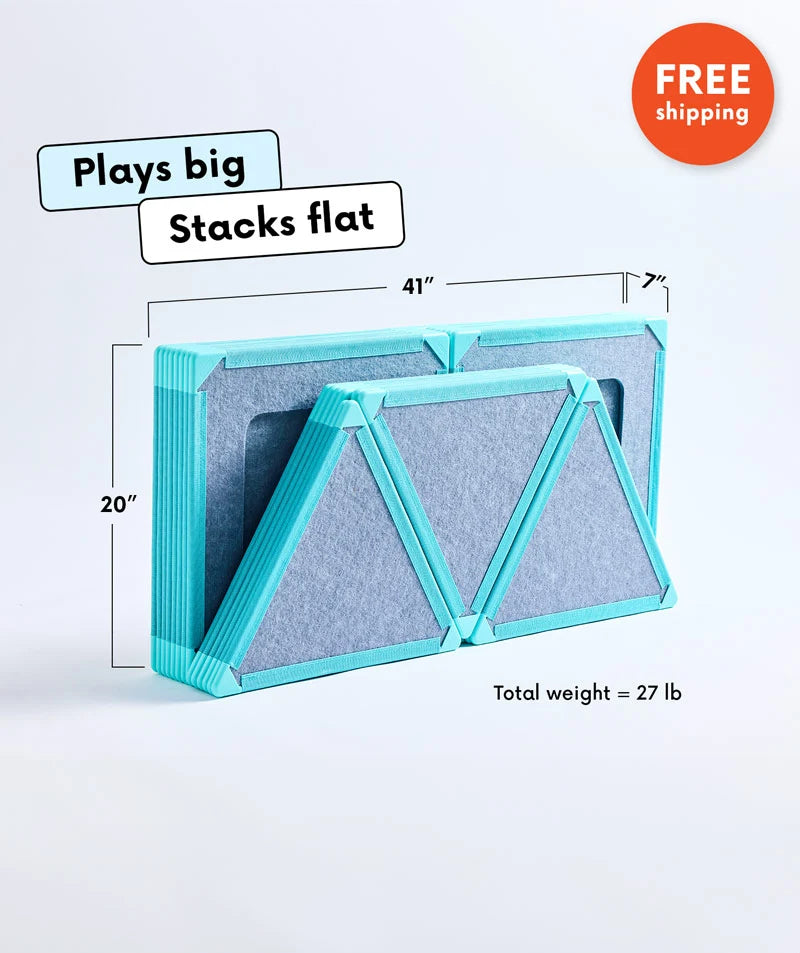
Parents rave that Superspace is "basically like life-sized magna tiles," but big enough to crawl inside.
What makes it transformative?
It replaces dozens of single-use toys with one open-ended system that grows with your child.
Instead of separate forts, tents, building blocks, and pretend play props cluttering every room, Superspace becomes all of them. Kids build castles on Monday, rocket ships on Wednesday, and cozy reading nooks by Friday.
One parent reported it's "the only thing we have purchased that gets them off of their tablets and into creative, imaginary play for hours."
The emotional payoff goes deeper than clean floors. When children spend sustained time building and creating with one versatile system, you witness their creativity soar.
As one customer shared about her family with six kids:
"The minute it arrived they were transforming our house into one adventure after another. Their imaginations ran wild."
This is the shift from consumption to creation. From fleeting novelty to lasting wonder. From toy clutter to intentional play.
Pair Superspace builds with storytelling nights or indoor camping adventures. The panels store flat in minutes, giving you back your space without guilt.
And because the system expands with add-on packs, it's the last major toy investment you'll make, growing from toddler forts to elementary engineering projects.

Sustainable Toy Choices That Earn Their Place
Apply three filters before a toy stays in rotation: multi-age appeal, open-ended function, and durable materials. Items that pass all three earn shelf space even in a minimalist setup.[6]
Toy minimalism isn't about deprivation. It's about choosing quality pieces that serve multiple purposes. Select wooden or fabric-based toys that withstand repair and hand-me-down cycles.
Eco-friendly choices signal to kids that quality matters more than quantity.[6]
Superspace exemplifies these sustainable principles. Each Big Set transforms 130 recycled plastic bottles into GRS-certified Eco-felt panels designed to last for years without cracking or crumbling.
The company has already kept over 6.2 million bottles out of landfills, proving that one durable play system can replace dozens of disposable toys while protecting the planet your child will inherit.
When buying new toys, choose toys that complement what you already own rather than duplicate the same play pattern.
Audit packaging and supply chains. Brands that offer repair kits or spare parts extend the life of each purchase.[6]
Encourage kids to write “toy bios” explaining why a piece deserves a home. This reflection boosts emotional connection and discourages impulse acquisitions.
Empower Kids to Maintain a Calm Play Space
Assign a rotating “play curator” role each week. The curator chooses the rotation bin, arranges displays, and leads the nightly tidy timer.[5]
End the day with a two-song cleanup sprint. Pair each session with a gratitude prompt so kids name one favorite moment or toy they enjoyed.
Keep a small “repair and recycle” basket. When something breaks, kids learn to decide whether to fix, repurpose, or let it go, reinforcing stewardship.
Post a simple visual checklist near the play zone: reset shelves, return puzzles, fluff cushions. Visual cues reduce nagging and build independence.
Celebrate milestones with non-toy rewards such as choosing the next family outing or inviting a friend for a Superspace build session.

Frequently Asked Questions About Toy Overload
What happens when a child has too many toys?
Research shows that children surrounded by too many toys experience shorter attention spans, sensory overload, and difficulty engaging in deep imaginative play.[1]
Too many options trigger decision fatigue, leading to restless flitting between toys rather than focused exploration. This undermines brain development during critical early years, when children need sustained focus to build problem-solving skills and creativity.
Parents often observe increased sibling conflict, more frequent meltdowns, and children claiming they have "nothing to do" despite rooms full of toys.
What is the 10 toy rule?
The 10 toy rule is a minimalist approach where children have access to only 10 toys at a time, with the rest stored out of sight and rotated every few weeks. This strategy reduces decision fatigue and encourages deeper engagement with fewer options.
While the exact number can vary by age and family, the principle aligns with research showing that toddlers offered four toys explored each one for longer and more creatively than peers given sixteen choices.[1]
Many families adapt this to 5-7 displayed toys plus a few open-ended systems like building blocks or fort panels.
How many toys are too much for kids?
There's no magic number, but research and family experience suggest that displaying more than 5-7 toys at once overwhelms most young children.[1]
Instead of counting total toys owned, focus on rotation: aim to store two-thirds of toys out of sight and curate what's accessible.
Watch for signs like constant toy-hopping, complaints of boredom despite abundance, and cleanup battles that drain everyone's energy.
The sweet spot varies by child, but when in doubt, reduce by half and observe whether focus and creativity improve over the following week.
Do kids do better with fewer toys?
Yes. Multiple studies confirm that children with fewer toys engage in longer, more creative play sessions.[1][2]
When toddlers had access to only four toys instead of sixteen, they explored each toy more thoroughly, invented new uses, and developed better fine motor control through repeated practice.
Families who trial toy fasts report dramatic improvements: extended attention spans, reduced sibling conflict, and children rediscovering toys they'd ignored for months.
The key is choosing fewer, high-quality, open-ended toys like Superspace's modular building panels that grow with your child and support multiple types of play.
How do I prevent toy overload from coming back after I declutter?
Sustain a calm play space by involving kids in regular rotation (every 2-4 weeks), setting loving boundaries with gift-givers, and teaching children to evaluate toys using simple criteria:
Does it spark imagination? Does it help me feel calm? Is it stressful to clean?
Celebrate milestones with experience-based rewards rather than new toys, and model intentional consumption by choosing quality over quantity.
When your family centers play around versatile systems that replace dozens of single-use items, maintenance becomes easier because fewer pieces enter your home in the first place.

The Power of Intentional Play
Clearing space on the shelf clears mental space for everyone in the family. You reclaim time, kids rediscover the joy of deep play, and clutter loses its grip on the evening routine.
The shift starts with one decision: choosing quality over quantity.
When you invest in versatile, open-ended play systems like Superspace, you're not just buying another toy. You're giving your child the last toy system they'll need, one that grows with them from toddlerhood through elementary school and beyond.
Instead of cycling through dozens of forgotten toys, Superspace becomes the foundation for years of creative exploration.
Forts today, engineering projects tomorrow, reading nooks always. It's the solution to toy clutter that actually works because it replaces the need for more.
Most importantly, your child learns that love and imagination grow best when play spaces breathe and when one transformative toy beats a mountain of distractions.
References
- Dauch, C., Imwalle, M., Ocasio, B., & Metz, A. (2018). The influence of the number of toys in the environment on toddlers’ play. Infant Behavior and Development, 50, 78–87. https://doi.org/10.1016/j.infbeh.2017.11.005
- Newman, S. (2017). Study Underscores Why Fewer Toys Is the Better Option. Psychology Today. https://www.psychologytoday.com/us/blog/singletons/201712/study-underscores-why-fewer-toys-is-the-better-option
- Coleman, F. (2024). Too many toys can be bad for kids. Study Finds. https://studyfinds.org/too-many-toys-bad-for-kids/
- Grimmer, L., & Grimmer, M. (2021). Why kids should not have lots of toys: and what to do if yours have too many. ABC News / The Conversation. https://www.abc.net.au/news/2021-12-20/why-kids-shouldnt-have-lots-of-toys-what-do-too-many/100704836
- Kansas Children’s Discovery Center. (2021). The Toy Monster: 10 Ways to Manage Too Many Toys. https://kansasdiscovery.org/the-toy-monster-10-ways-to-manage-too-many-toys/
- Causon, L. (2024). Can too many toys harm a child’s development? Anamalz. https://www.anamalz.com/blogs/ramblings/can-too-many-toys-harm-a-child-s-development