Unlock Your Child’s Potential in 2026: Evidence-Based Ways to Build Confidence, Curiosity, and Resilience
Ant ErwinYou tell your child they're smart. You celebrate every A+. Yet when challenges arise, they shut down or avoid trying.
What if praising talent is holding them back?
Research shows that how we unlock your child's potential has less to do with innate gifts and more to do with daily habits, the language we use, and creating space for healthy struggle.
Simple shifts like process praise, play-based learning, and responsive interactions build confidence and resilience that last a lifetime.
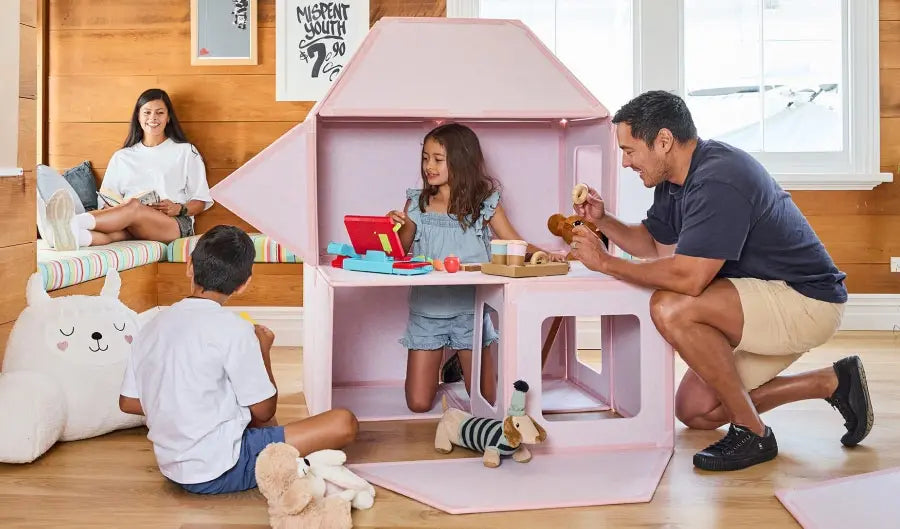
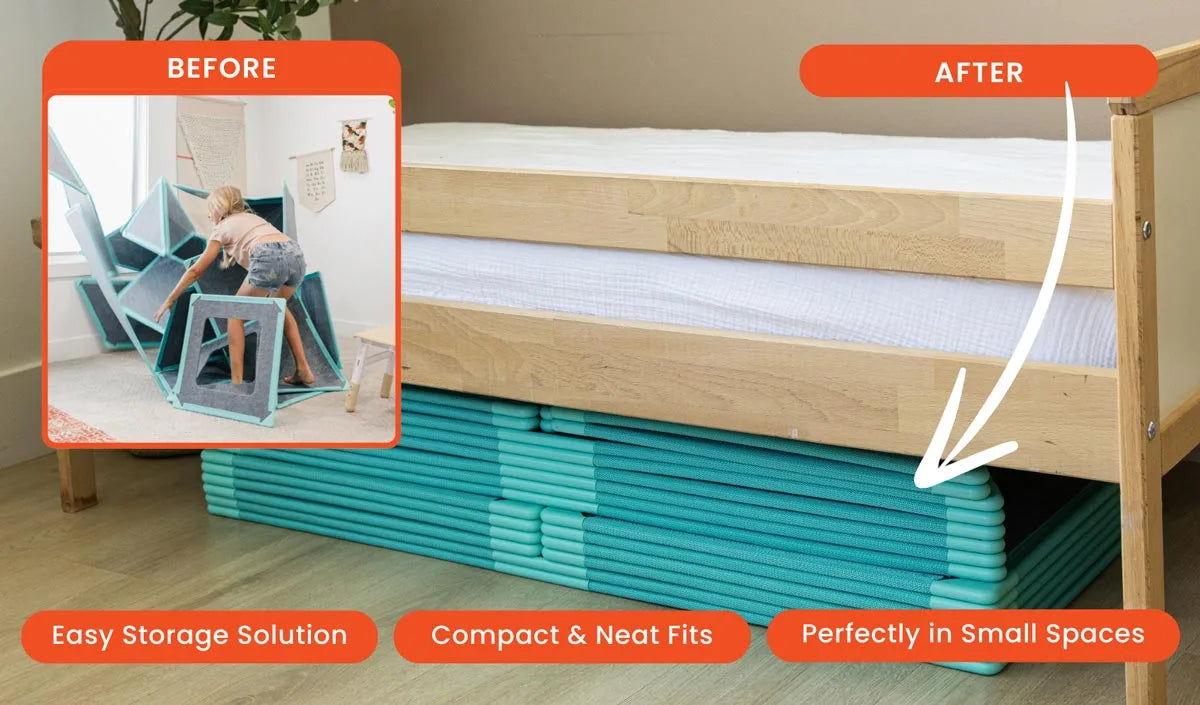
This guide gives you evidence-backed strategies you can use today, including tools like Superspace's magnetic building sets that encourage problem-solving through play.

Key Takeaways
- Growth mindset matters more than talent—praising effort and strategy instead of innate ability helps children develop resilience and persistence over time.
- Building confidence starts with process praise that focuses on what your child did (their actions) rather than who they are (their traits).
- Play-based learning, especially open-ended activities like building and STEM exploration, strengthens problem-solving skills and curiosity in ways that structured lessons cannot.
- Executive function skills (planning, focus, self-control) develop best through simple daily routines, visual checklists, and age-appropriate goal-setting.
- Serve-and-return interactions—responsive back-and-forth conversations—shape brain architecture and help children feel seen, safe, and ready to explore.
- Age-specific strategies work better than one-size-fits-all approaches: what builds confidence in a preschooler looks different from what works for a teen.
- Avoiding common pitfalls like talent-only praise, overscheduling, and perfectionism creates space for children to take healthy risks and learn from mistakes.
Table of Contents
- Why Potential Is More Than Talent
- Know Your Child's Wiring
- Build Confidence & Resilience
- Create a Brain-Building Home
- Power of Play & Curiosity
- Strengthen Executive Function & Habits
- Partner With School & Mentors
- Age-Specific Action Plans
- Pitfalls & Myths to Avoid
- Quick Start Checklist
- Conclusion: Keep the Momentum
- References
Why Potential Is More Than Talent
When we say a child is "naturally gifted" or "so smart," we think we're building their confidence. In reality, we may be teaching them that ability is fixed and effort is unnecessary.
Psychologist Carol Dweck's research on growth mindset shows that children who believe skills can be developed through practice (growth mindset) outperform peers who believe talent is innate (fixed mindset) [1].
The difference comes down to language.
Saying "You worked really hard on that problem" teaches children that effort leads to success.
Saying "You're so smart" teaches them that success comes from who they are, not what they do.
When smart kids hit their first real challenge, they often interpret struggle as proof they're not smart after all.
Growth-minded kids see struggle as a normal part of learning.
Why is a growth mindset important?
Because it protects children from giving up when things get hard, it reframes mistakes as data instead of failure.
Try using "yet" language at home. When your child says, "I can't do this," add one word: "You can't do this yet." That single word opens the door to possibility instead of shutting it.
Fixed mindset vs growth mindset examples:
"I'm bad at math" (fixed) becomes "I'm still learning how to solve these problems" (growth).
"This is too hard" (fixed) becomes "This is hard right now, but I can ask for help" (growth).
Process praise—praising the strategy, effort, or persistence your child used—is one of the simplest tools to build a growth mindset [2].

Know Your Child's Wiring
No two children develop the same way. Temperament, interests, sensory preferences, and learning styles all shape how your child explores the world.
Some children are cautious observers who need time to warm up. Others dive into new experiences without hesitation. Some thrive on routine and predictability. Others need novelty and movement.
Spotting your child's natural strengths starts with observation.
What activities make them lose track of time?
When do they seem most engaged or relaxed?
What kinds of problems do they enjoy solving?
Aligning activities with your child's wiring doesn't mean avoiding challenges. It means understanding how to scaffold new skills in ways that feel approachable rather than overwhelming.
A child who loves building might learn fractions through Lego or magnetic tiles before they connect with a worksheet. A child who loves stories might grasp history through narrative before they remember facts from a textbook.
When you honor your child's natural curiosity instead of forcing a one-size-fits-all path, you help them build confidence in their own learning process.
Build Confidence & Resilience
Confidence doesn't come from constant praise or protection from failure. It comes from trying hard things, making mistakes, and learning that you can recover.
How to build self esteem in children starts with focusing on effort and strategy rather than outcomes. When your child struggles with a task, resist the urge to jump in and fix it. Instead, ask questions: "What have you tried so far?" "What could you try next?"
This kind of coaching helps children build problem-solving skills and self-trust.
Research on resilience shows that children who experience manageable challenges—what psychologists call the "stretch zone"—develop grit and persistence [3].
Grit, the combination of passion and perseverance, predicts long-term success better than IQ or talent [4].
How to build confidence in yourself (and your child) involves reframing failure.
Instead of "I failed," try "I learned what doesn't work." Instead of "I made a mistake," try "Mistakes help my brain grow."
Teach your child to set micro-goals: small, achievable steps that build momentum. Breaking a big project into bite-sized tasks makes progress visible and reduces overwhelm.
Celebrate effort, strategy, and persistence as much as (or more than) outcomes.
Build confidence by noticing when your child tries a new approach, asks for help, or keeps going after a setback.
Resilience in children grows when they have a secure base (they feel safe and supported) and opportunities to practice bouncing back from small failures.

Create a Brain-Building Home
Your home environment shapes your child's developing brain in profound ways.
Simple, consistent routines can support executive function, emotional regulation, and curiosity.
Serve-and-return interactions are the foundation of healthy brain architecture [5].
These are the back-and-forth exchanges where you respond to your child's cues. Your toddler points at a bird, and you say, "Yes, that's a robin! See the red chest?" Your school-age child shares a worry, and you listen without rushing to fix it.
Even 10-minute connection blocks—fully present time where you follow your child's lead—can strengthen attachment and build the security that fuels exploration.
Sleep, nutrition, and screen-time hygiene all matter for brain development.
Children who get consistent, adequate sleep (10-12 hours for younger kids, 8-10 for teens) show better focus, emotional regulation, and memory.
Balanced nutrition with regular meals supports stable energy and mood. Excessive screen time, especially before bed, disrupts sleep and reduces time for active play and face-to-face interaction [6].
Set a screen curfew an hour before bedtime. Replace passive screen time with active alternatives like building, outdoor play, or family conversations.
For practical strategies to reduce screen dependence, see our guide on how to reduce screen time for kids.
Create a predictable bedtime routine (bath, story, lights-out at the same time) to help your child's brain wind down.
Routines reduce decision fatigue and create a sense of safety that helps children regulate emotions and focus during the day.

Power of Play & Curiosity
Play is not a break from learning. Play is how young children learn best.
Play-based learning in early childhood education supports cognitive, social, emotional, and physical development in ways that structured lessons cannot replicate [7].
When children build with blocks and magnetic tiles, they explore physics (balance, gravity, symmetry).
When they engage in pretend play, they practice perspective-taking and problem-solving. When they dig in sand or splash in water, they learn about cause and effect.
Open-ended play—activities without a "right" answer—encourages creativity and persistence. For a deeper exploration of why open-ended play matters, see our ultimate guide to open-ended play.
Magnetic building sets, art supplies, loose parts (cardboard, fabric scraps, natural objects), and outdoor exploration all invite children to experiment, fail, and try again.
Kindergarten activities that emphasize hands-on exploration and discovery prepare children for STEM learning later.
For hands-on ideas that blend play with problem-solving, explore our collection of STEM activities for kids.
Early learning that feels like play builds neural pathways that support abstract thinking, flexibility, and resilience.
Foster curiosity by asking open-ended questions.
Instead of "Did you have fun?" try "What was the best part of your project?" Instead of "What color is that?" try "What do you notice about these shapes?"
Resist the urge to correct or direct every moment of play. Let your child lead. Let them make "mistakes." Let them discover solutions through trial and error.
Learning disguised as fun is the most powerful kind.

Strengthen Executive Function & Habits
Executive function skills—working memory, flexible thinking, and self-control—are stronger predictors of school success than IQ.
Executive function in children develops gradually and benefits from consistent practice and scaffolding [8].
For more on how play supports executive function development, see our guide on executive functioning through play.
Simple routines help children internalize habits without relying on constant reminders. A visual morning checklist (pictures for younger kids, words for older ones) supports independence and reduces power struggles.
First-then routines teach delayed gratification and planning. "First, we brush our teeth, then we read a story." "First homework, then screen time."
Visual timers help children manage transitions and understand the passage of time. Chunking tasks into manageable steps reduces overwhelm and builds confidence.
Teach goal-setting by starting small. Help your child pick one small goal for the week (make the bed every day, read for 15 minutes, practice a skill). Celebrate when they follow through, and talk through what got in the way if they didn't.
Let children experience natural consequences (within safe limits).
Forgetting a library book means missing out on choosing a new one. Leaving toys out means they might get put away. These small lessons build responsibility and planning skills.
Encourage self-talk and reflection. "What did I do that worked?" "What will I try differently next time?" Metacognition—thinking about thinking—strengthens learning and self-regulation.

Partner With Schools and Mentors
You are your child's first and most important teacher, but you're not the only one.
Strong partnerships with teachers, coaches, and mentors amplify what you're doing at home.
At parent-teacher conferences, ask open-ended questions: "What does my child do when they're stuck?" "Where do you see them thriving?" "What can I reinforce at home?"
Document progress over time.
Save samples of schoolwork, take notes on what your child is working on, and share observations with teachers if you notice changes in behavior, motivation, or confidence.
Social emotional learning (SEL) programs at school teach skills like self-awareness, empathy, and responsible decision-making. Reinforce these at home by naming emotions, modeling healthy conflict resolution, and practicing perspective-taking.
If your child is struggling persistently, don't wait. Reach out early for support.
Schools can offer accommodations, tutoring, or counseling. Outside resources like mentors, tutors, or enrichment programs can provide additional scaffolding and encouragement.
Social learning—learning through observation and collaboration—is powerful. Encourage your child to work with peers, join clubs, or find a mentor in an area of interest.
When children see themselves as part of a learning community (not isolated achievers), they're more likely to ask for help and persist through challenges.

Age-Specific Action Plans
What works for a preschooler won't work for a teen. Tailor your approach to your child's developmental stage.
Ages 3-6: Early Childhood Foundations
Focus on play, connection, and emotional vocabulary. Serve-and-return interactions are critical during these years.
Name emotions as they happen: "You look frustrated. That puzzle is tricky." Label your own emotions to model emotional literacy: "I felt disappointed when I made that mistake, so I took a deep breath."
Encourage hands-on exploration.
Provide open-ended materials (blocks, art supplies, sand, water). Follow your child's lead during play instead of directing every activity. Research shows that fewer, high-quality toys promote deeper, more creative play than overwhelming children with options.
Build routines around sleep, meals, and transitions. Predictability helps young children feel safe and regulated.
Practice taking turns, sharing, and simple problem-solving during play. Use "yet" language early: "You can't tie your shoes yet, but you're learning."
Ages 7-12: School-Age Growth
This is the age when children start internalizing beliefs about their abilities. Growth mindset feedback matters more than ever.
Give specific process praise: "You kept trying different strategies until you found one that worked." Avoid generic praise: "Good job."
Assign age-appropriate chores and responsibilities. Let children experience the natural consequences of forgetting tasks (within reason). Responsibility builds competence and self-efficacy.
Establish daily reading routines. Even 15-20 minutes of independent reading builds vocabulary, comprehension, and focus.
Encourage goal-setting and reflection. Help your child set one weekly goal (academic, social, or personal) and check in on progress.
Support social emotional learning by practicing empathy and perspective-taking. "How do you think your friend felt when that happened?"
Teens: Building Autonomy & Identity
Adolescence is about identity formation and autonomy. Your role shifts from director to coach.
Offer autonomy-supportive coaching: "What do you think you should do?" instead of "Here's what you need to do." Teens need space to make decisions and experience consequences (within safe boundaries).
Encourage goal-setting and portfolio-building.
Help your teen identify interests, strengths, and areas for growth. Support them in pursuing passion projects, internships, or leadership roles.
Model healthy risk-taking. Talk about your own mistakes and what you learned. Normalize failure as part of growth.
Support social learning and peer collaboration. Teens learn powerfully from peers. Encourage group projects, clubs, and team activities that build connection and accountability.
Stay curious and connected. Ask open-ended questions about their day, interests, and challenges. Listen more than you advise.

Pitfalls & Myths to Avoid
Even well-meaning parents fall into traps that undermine children's development.
Talent-only praise ("You're so smart," "You're a natural") teaches children that ability is fixed. When challenges arise, they doubt themselves instead of trying harder.
Overscheduling leaves no space for downtime, free play, or rest. Children need unstructured time to process emotions, explore interests, and just be.
Perfectionism—both in parents and children—creates anxiety and fear of failure. Progress matters more than perfection.
Comparing siblings or peers sends the message that worth is relative. Every child has a unique path and timeline.
Rescuing children from every struggle robs them of the chance to build resilience. Let them experience manageable challenges and learn to recover.
Quick Start Checklist
Ready to start today? Pick one or two actions from this list:
- Replace one instance of talent praise with process praise this week ("You figured out a new way to solve that!" instead of "You're so smart!").
- Add a 10-minute connection block to your daily routine (follow your child's lead during play or conversation).
- Introduce "yet" language when your child says, "I can't."
- Set up one visual routine (morning checklist, bedtime steps) to build executive function.
- Ask an open-ended question at dinner: "What was something that challenged you today?"
- Schedule a 15-minute daily reading or play block with no screens.
- Set one small weekly goal with your child and celebrate effort (not just outcomes).

Conclusion: Keep the Momentum
Unlocking your child's potential isn't about pushing harder or expecting perfection. It's about small, consistent habits that build confidence, curiosity, and resilience over time.
Research backs what many parents intuitively know: children thrive when they feel safe, seen, and supported to take healthy risks.
Process praise, play-based learning, responsive interactions, and growth-mindset language are simple tools that make a profound difference.
Progress matters more than perfection. Start with one strategy from this guide and build from there.
Your child's potential unfolds one conversation, one routine, one playful moment at a time. If you're looking for toys that support open-ended play and problem-solving, explore Superspace's magnetic building sets—designed to grow with your child's developing skills.
References
- Dweck, C. S. (2006). Mindset: The New Psychology of Success. Random House. https://www.penguinrandomhouse.com/books/44330/mindset-by-carol-s-dweck-phd/
- Dweck, C. S., & Yeager, D. S. (2019). Mindsets: A View from Two Eras. Perspectives on Psychological Science. https://doi.org/10.1177/1745691618804166
- Masten, A. S. (2001). Ordinary Magic: Resilience Processes in Development. American Psychologist. https://doi.org/10.1037/0003-066X.56.3.227
- Duckworth, A. L., Peterson, C., Matthews, M. D., & Kelly, D. R. (2007). Grit: Perseverance and Passion for Long-Term Goals. Journal of Personality and Social Psychology. https://doi.org/10.1037/0022-3514.92.6.1087
- Center on the Developing Child at Harvard University (2010). Serve and Return Interaction Shapes Brain Architecture. https://developingchild.harvard.edu/resources/serve-return-interaction-shapes-brain-circuitry/
- Hale, L., & Guan, S. (2015). Screen Time and Sleep Among School-Aged Children and Adolescents: A Systematic Literature Review. Sleep Medicine Reviews. https://doi.org/10.1016/j.smrv.2014.07.007
- Ginsburg, K. R. (2007). The Importance of Play in Promoting Healthy Child Development and Maintaining Strong Parent-Child Bonds. Pediatrics. https://doi.org/10.1542/peds.2006-2697
- National Scientific Council on the Developing Child (2014). Enhancing and Practicing Executive Function Skills with Children from Infancy to Adolescence. https://developingchild.harvard.edu/resources/activities-guide-enhancing-and-practicing-executive-function-skills-with-children-from-infancy-to-adolescence/