Creative Play: Benefits, Best Activities, and Screen-Free Toys Kids Love
Craig SpencerYour child just asked for another hour of screen time. You say no, but then what? The room stays quiet, or chaos erupts.
Creative play offers a different path. It's how kids turn a blanket into a spaceship, a cardboard box into a castle, and an afternoon into an adventure.
Research shows creative play strengthens problem-solving, language, and emotional resilience [1].
It also gives parents something rare: calm, independent play that doesn't require screens.
This guide covers what creative play really means, why it matters for development, and how tools like Superspace magnetic fort tiles make it easier for families to build screen-free routines that actually stick.

Key Takeaways
- Creative play is child-led, open-ended activity that sparks imagination and problem-solving without prescribed rules.
- It supports cognitive development, language skills, social cooperation, motor coordination, and emotional regulation.
- Research links creative play to improved executive function, neural plasticity, and even reduced parental stress.
- The best creative play toys are open-ended, multi-use, safe, and easy to reset like magnetic fort systems.
- Short daily routines of 20-30 minutes screen-free creative play can transform family dynamics and build lasting independence.
Table of Contents
What Is Creative Play?
Creative play is any activity where children use their imagination to explore, invent, and express themselves freely. It includes role-playing, building, storytelling, art-making, and sensory exploration.
Unlike structured crafts or guided games, creative play has no fixed rules or "right" outcome.
The key element is autonomy. Kids decide what to build, how to play, and when to change direction. This self-directed freedom allows them to experiment, make choices, and learn from trial and error in a low-pressure environment.
Creative play overlaps with imaginative play, dramatic play, and constructive play. All share the same foundation: open-ended materials, child-led choices, and space for invention.
Researchers often describe creativity through the "4 Ps" framework:
- Person (the child's traits and interests)
- Process (how they explore and create)
- Product (what they make or imagine)
- Press (the environment that supports or limits creativity)
For parents, this means providing the right tools, time, and encouragement without directing every moment [1].

How Creative Play Shapes Development
Creative play isn't just fun. It's how young brains build the skills they'll use for life.
Cognitive Development
A 2025 narrative review in Frontiers in Neuroscience found that play activates neural circuits supporting executive function, language development, and cognitive flexibility [1].
When children build forts, solve design problems, or invent stories, they practice planning, sequencing, and adapting to new challenges.
These are the same executive function skills linked to academic success and emotional regulation later in life.
Creative play essentially trains the brain to think flexibly and solve problems independently.
Social and Emotional Growth
Creative play teaches cooperation, empathy, and communication. When siblings build a fort together or negotiate roles in pretend play, they practice turn-taking, compromise, and emotional expression.
Research from the Universities of Leeds and Huddersfield showed that a structured creative play program for parents and toddlers significantly reduced symptoms of postnatal depression and improved parent-child bonding [2].
The social connection and shared play experiences created a support network that lifted parental mental health, which in turn improved children's emotional security.
Physical and Sensory Benefits
Building, climbing, balancing, and manipulating materials strengthen fine and gross motor skills.
Sensory-rich play, touching different textures, moving through space, and hearing sounds helps children regulate their bodies and emotions.
For neurodivergent children, sensory-friendly creative play materials (like soft felt panels or quiet building toys) offer calming, organizing input that supports focus and emotional balance.

Types of Creative Play
Not all creative play looks the same. Here are the main types, each offering unique developmental benefits.
Imaginative and Role Play
Pretend play lets kids step into different roles: chef, astronaut, teacher, superhero. They create narratives, solve imagined problems, and explore emotions in safe scenarios.
This type of play builds language skills, perspective-taking, and emotional intelligence. It also allows children to process real-world experiences (like doctor visits or new siblings) through symbolic play.
A 2023 scoping review found that pretend play is associated with measurable benefits in children's executive function, language development, creativity, and social understanding [4].

Building and Constructive Play
Forts, block towers, magnetic tile structures, and LEGO creations fall into this category. Children plan, test, redesign, and problem-solve as they build.
Constructive play strengthens spatial reasoning, engineering thinking, and persistence.
Research shows that play with open-ended materials reinforces executive function, cognitive self-regulation, reasoning, and problem-solving skills [5].
Life-sized building systems like Superspace magnetic fort tiles take this further by creating play spaces kids can actually enter, transforming imagination into physical reality.
Arts and Maker Play
Painting, drawing, collage, music, and movement activities encourage self-expression and experimentation. Open-ended art (no templates or instructions) lets kids explore color, texture, rhythm, and composition on their own terms.
The 2018 NIH Kennedy Center Workshop on Music and the Brain highlighted that early exposure to music promotes language development, attention span, and cognitive function [3].
Music and art aren't just creative outlets; they're cognitive builders.
Sensory Play
Sensory play involves materials like sand, water, playdough, rice bins, or textured fabrics. It helps children explore physical properties (rough, smooth, heavy, light) and regulate sensory input.
For children with sensory processing differences, predictable sensory play materials create calming, organizing experiences that support focus and emotional regulation. Learn more in our guide to best sensory play toys.

Age-Ready Activity Ideas
Creative play adapts to every stage. Here's what works by age group. For more hands-on ideas, explore our STEM activities guide.
Ages 3-4: Simple Exploration
Young preschoolers thrive with simple, sensory-rich activities:
- Build blanket tunnels or simple fort hideaways with soft panels.
- Set up a pretend grocery store with empty boxes and play food.
- Offer large crayons, finger paint, or chalk for open-ended art.
- Play freeze dance or musical movement games.
- Create a color scavenger hunt around the house.
At this age, play sessions are shorter (10-15 minutes) and benefit from gentle adult guidance to help with transitions and simple problem-solving.
Ages 5-7: Expanding Narratives
Early elementary kids start creating complex stories and longer play sequences:
- Build story forts: each room represents a different scene in an imagined adventure.
- Make DIY puppet theaters with a cardboard box and socks.
- Create obstacle courses with magnetic fort panels, cushions, and tape lines.
- Set up a pretend vet clinic, post office, or restaurant.
- Build structures with engineering challenges like "make a bridge" or "create a secret door."
This age group can play independently for 20-30 minutes and benefits from open-ended prompts rather than step-by-step instructions.
Ages 8-10: Challenge and Collaboration
Older kids enjoy complexity, strategy, and collaboration:
- Set STEM building challenges: "Build the tallest tower with 10 panels" or "Design a maze with multiple paths."
- Create imaginary worlds with maps, rules, and character backstories.
- Host cooperative quests where siblings work together to solve a made-up problem.
- Build reading nooks or art studios inside large fort structures.
- Combine building with storytelling or dramatic play.
Kids this age often play in sustained sessions (30-60 minutes) and appreciate having their creations left standing for multi-day projects.

Screen-Free Toys That Supercharge Creative Play
The right toys make creative play easier, not harder. Look for materials that are open-ended, multi-use, safe, and simple to reset.
A 2025 systematic review of 25 studies found that open-ended play materials show positive associations with children's problem-solving abilities, creativity, academic skills in reading and math, and both convergent and divergent thinking [6].
What Makes a Great Creative Play Toy?
- Few or no rules: The toy doesn't dictate one "correct" way to play.
- Multi-use: It works for building, pretending, hiding, creating, and more.
- Safe and soft: No sharp edges, non-toxic materials, age-appropriate design.
- Easy to reset: Quick setup and cleanup encourage repeat play.
- Expandable: The system grows with the child's imagination and skill level.
Why Magnetic Fort Systems Stand Out
Magnetic building forts meet all these criteria while solving common pain points parents face with traditional fort-building.
Superspace's life-sized magnetic fort system uses patented auto-aligning magnetic tiles made from soft, eco-friendly felt (recycled bottles).
The magnets are calibrated for safe strength: firm enough to hold structures but gentle enough for kids to pull apart and rebuild easily.
This means children as young as three can build independently without frustration.
Unlike clip-based fort kits (which require dexterity and adult help) or pillow forts (which collapse constantly), Superspace panels snap together instantly and create stable play spaces kids can enter, decorate, and reimagine daily.
The felt panels are sensory-friendly, quiet, and washable.
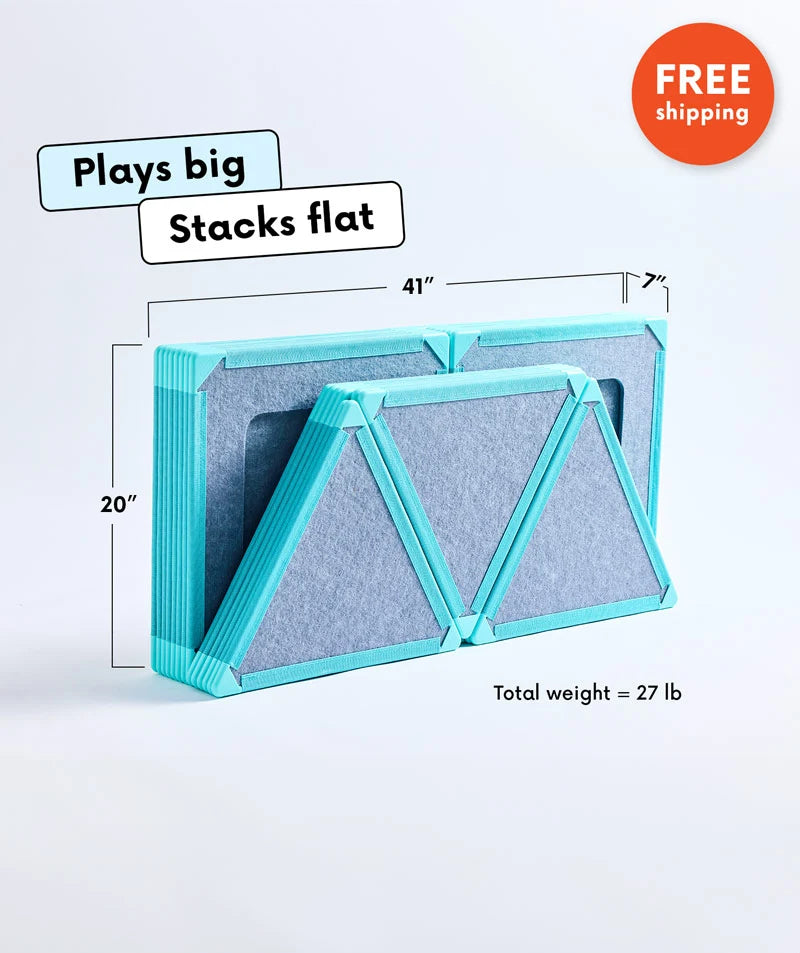
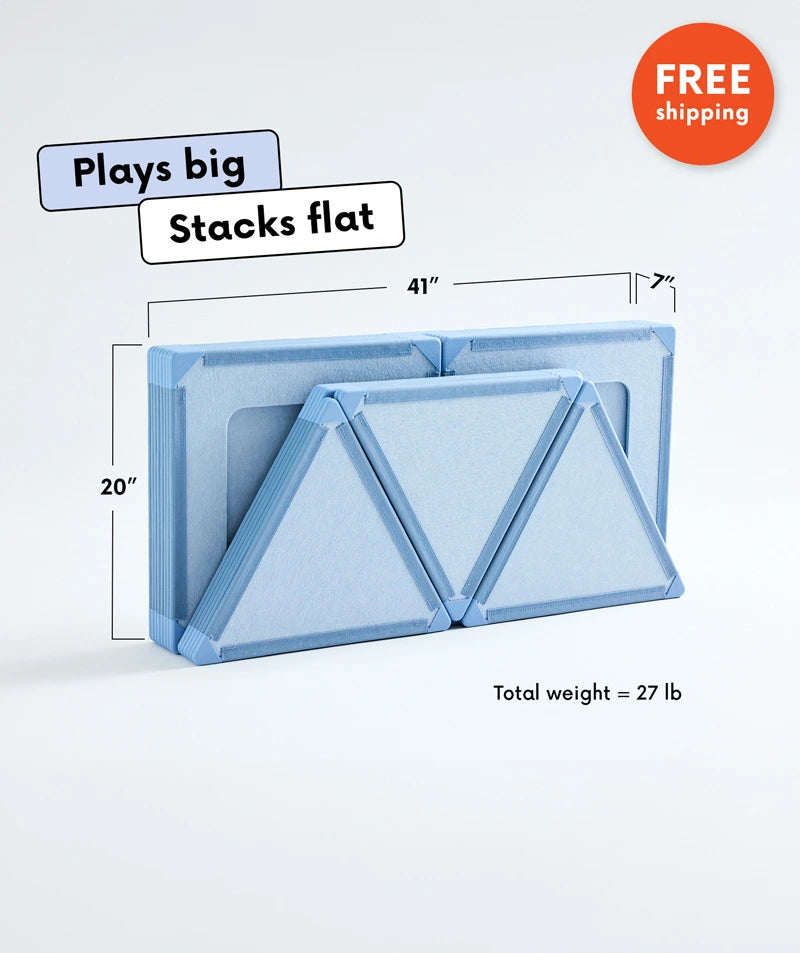
They stack flat for under-bed or closet storage, solving the clutter problem many families face.
And because the system is modular and expandable, it grows with your child from simple hideaways at age three to complex multi-room builds at age ten.
Most importantly, it replaces multiple single-use toys with one versatile system that supports imaginative play, cooperative building, sensory regulation, and screen-free downtime all at once.

Setting Up a Creative Play Space
You don't need a playroom to support creative play. You just need a flexible corner and a few smart strategies.
Quick Setup and Storage
Choose a spot with open floor space, a living room, a bedroom corner, or even a hallway. Magnetic fort panels can transform any space in minutes, then store flat under beds or in closets when not in use.
Rotate materials weekly to keep play fresh: this week's fort can become a stage, shop, or spaceship with a few simple prop swaps.
Small-Space Solutions
If space is tight, focus on vertical play and modular systems. Magnetic panels create walls and roofs without taking up permanent floor space. When the play ends, everything collapses flat.
Use bins or baskets for art supplies, dress-up items, and small props. Label them with pictures (for younger kids) so cleanup becomes part of the play routine.
Safety and Supervision
For ages 3-4, supervise fort building to help with balance and transitions. Ensure materials are non-toxic, have no sharp edges, and meet safety standards.
Superspace panels are designed for play inside, not climbing on top. Make sure kids understand this distinction. The magnetic strength is calibrated for safe rebuilding, not load-bearing weight.

How to Encourage Creative Play Daily
Making creative play a habit requires small, consistent shifts in routine and mindset.
Build a Screen-Free Block
Set aside 20-30 minutes each day for screen-free creative time. This works best right after school, before dinner, or as a weekend morning ritual.
Don't schedule this time with activities. Leave it open-ended. Kids who resist at first often surprise you once screens are off and boredom kicks in (boredom is the birthplace of creativity).
Be a Facilitator, Not a Director
Resist the urge to solve problems, suggest ideas, or perfect their builds. Creative play thrives when children lead.
Ask open-ended questions instead:
- "What are you building?"
- "What happens next in your story?"
- "What would make this even better?"
Celebrate the process, not just the final product. Comment on effort, problem-solving, and creativity rather than appearance or accuracy.
Adapt for Neurodivergent Children
For kids with sensory sensitivities or executive function challenges, creative play benefits from structure and choice.
Offer predictable transitions: "In five minutes, we'll start cleanup." Use visual timers. Provide sensory-friendly materials (soft felt, quiet toys, calming textures).
Let kids choose between two or three play options rather than endless possibilities, which can feel overwhelming.
Creative play should feel calming and organizing, not chaotic. Learn more about multi-sensory tools for ADHD and how they support neurodivergent play.
Frequently Asked Questions
What age is creative play best for?
Creative play is beneficial from toddlerhood through late childhood (and beyond). Infants explore through sensory play. Preschoolers engage in imaginative and building play. School-age kids tackle complex narratives and construction challenges. The type of play evolves, but the benefits remain consistent across ages.
How do I start if my child prefers screens?
Start small. Introduce a 10-minute screen-free window with high-interest materials (like magnetic fort panels or art supplies). Stay nearby and play alongside them at first. Gradually increase the time as they build comfort and independence. Expect resistance initially; consistency and patience pay off.
Is creative play messy or space-consuming?
It doesn't have to be. Choose materials that stack, fold, or store flat. Magnetic fort systems like Superspace collapse into compact storage. Rotate toys weekly to limit clutter. Make cleanup part of the play routine with simple, kid-friendly organization systems.
Are magnetic forts safe if they fall over?
Superspace magnetic forts are designed for play inside the structure, not for climbing on top. The magnetic strength is calibrated to hold panels firmly during play but allow easy dismantling by children. This balance means forts stay stable during pretend play but can be rebuilt safely if knocked down. Always supervise younger children (ages 3-4) during building and play.

Build Their World, Calm Yours
Creative play is more than entertainment. It's how children develop the cognitive flexibility, emotional resilience, and social skills that carry them through life.
The benefits extend to parents, too. Research shows that creative play programs reduce stress, improve bonding, and create calmer home environments [2].
When kids play independently and joyfully, parents gain space to breathe.
Screen-free routines built around open-ended play don't require perfection or large investments. They require intention, consistency, and the right tools.
Magnetic fort systems like Superspace offer one practical, expandable solution: life-sized play spaces that grow with your child's imagination, stack flat when you need order, and replace a pile of single-use toys with one versatile system. Learn everything you need to know before buying.
Start small. Set aside twenty minutes. Put away the screens. Hand your child a few magnetic panels and see what they build. You might be surprised how quickly calm follows creativity.
References
- Frontiers in Neuroscience (2025). "The neurobiology of play: a narrative review of evidence." Available at: https://www.frontiersin.org/journals/neuroscience/articles/10.3389/fnins.2025.1729411/full
- Universities of Leeds and Huddersfield (2024). Creative play program study on postnatal depression and parent-child bonding. Reported in: The Desert Review
- National Institutes of Health Kennedy Center Workshop on Music and the Brain (2018). Findings on early music exposure and cognitive development. Referenced in: Fennies.com
- Hashmi, M. (2023). How do children play with toy trains and for what benefits? A scoping review. European Journal of Investigation in Health, Psychology and Education. PMID: 37887150. Available at: https://pubmed.ncbi.nlm.nih.gov/37887150/
- Cankaya, O., Rohatyn-Martin, N., Leach, J., Taylor, K., & Bulut, O. (2023). Preschool children's loose parts play and the relationship to cognitive development: A review of the literature. Journal of Intelligence. PMID: 37623534. Available at: https://pubmed.ncbi.nlm.nih.gov/37623534/
- Cankaya, O., Martin, M., & Haugen, D. (2025). The relationship between children's indoor loose parts play and cognitive development: A systematic review. Journal of Intelligence. PMID: 40422652. Available at: https://pubmed.ncbi.nlm.nih.gov/40422652/