Eco-Friendly Toys: How to Cut Plastic Toy Waste and Choose Better Play
Craig SpencerQuick answer: Eco-friendly toys are made from recycled or renewable materials, built to last, and open-ended so one toy replaces many. They matter because the toy industry is the most plastic-intensive in the world and nearly 80% of toys end up in landfills. Choosing durable, recycled-material play keeps plastic in use and out of landfill.
When families start cutting plastic from their homes, the playroom is often the biggest surprise. Toys are one of the most plastic-heavy things we buy for our kids.
Most of them are also built to be thrown away, which is how so much plastic ends up in landfill. The good news is that better choices exist.
Eco-friendly toys, especially durable ones made from recycled materials like Superspace, let kids play more while sending far less plastic to landfill.

Key Takeaways
- The toy industry is the most plastic-intensive industry in the world, using around 40 tonnes of plastic for every one million dollars of revenue.
- About 90% of toys are made from plastic, and nearly 80% end up in landfills, incinerators, or the ocean.
- Globally, only about 9% of all plastic waste is actually recycled, and toys are especially hard to recycle.
- An eco-friendly toy combines recycled or renewable materials, real durability, and open-ended play, so one toy replaces many.
- Research shows children play longer and more creatively with fewer, better toys, which means buying less can be both greener and better for development.
- Recycled-material, open-ended toys like Superspace turn used plastic bottles into years of screen-free play instead of landfill waste.
Table of Contents
- Why Are Plastic Toys Bad for the Environment?
- How Much Plastic Toy Waste Ends Up in Landfill?
- What Makes a Toy Eco-Friendly?
- Wooden Toys vs Recycled Plastic Toys: Which Is Better?
- What Are the Best Eco-Friendly Toys for Kids?
- How Can Parents Reduce Plastic Toy Waste?
- How Is Superspace Made From Recycled Plastic Bottles?
- Small Swaps That Cut Plastic Toy Waste for Good
- Frequently Asked Questions
- References
Why Are Plastic Toys Bad for the Environment?
Most toys start life as fossil fuel. Around 90% of the toys sold today are made from plastic, and the toy industry is the most plastic-intensive industry in the world, using roughly 40 tonnes of plastic for every one million dollars of revenue [2].
That plastic is usually virgin plastic, made new from oil and gas rather than recycled from existing waste. Producing it releases greenhouse gases and, in the case of some plastics, additives that raise health and safety concerns for young children.
The bigger problem is what happens next. Plastic toys are notoriously hard to recycle because they mix different plastics, metals, electronics, and paint into one small object, so almost no curbside program will take them [2].
Once a plastic toy is finished, it does not simply disappear. Many plastics take hundreds of years to break down, and along the way they can shed microplastics into soil and water [3].
None of this means you should feel guilty about the toys already in your home. It just means that the next toy you choose is a real chance to do better.

The scale of toy waste is bigger than most parents realize. Nearly 80% of toys end up in a landfill, an incinerator, or the ocean, and discarded toys make up close to 6% of all landfill plastics [2][3].
This is part of a much larger plastic problem. Globally, only about 9% of all the plastic waste we create is actually recycled, while roughly half goes to landfill and the rest is burned or leaks into the environment [1].
Toys are a textbook example of the throwaway items driving that waste. Nearly two-thirds of all plastic waste comes from products designed to last less than five years, and cheap novelty toys often last only weeks [1].
A large share of mismanaged plastic also reaches the sea. Researchers estimate that around 8 million metric tons of plastic enter the ocean from land every year, where it harms wildlife and breaks into microplastics [5].
That is why movements like Plastic Free July have grown worldwide, and why the playroom is such a powerful place to start. Cutting plastic toy waste is one of the most visible changes a family can make, at any time of year.

What Makes a Toy Eco-Friendly?
"Eco-friendly" gets stamped on a lot of packaging, so it helps to know what actually counts. A genuinely eco-friendly toy usually ticks five boxes.
1. Recycled or renewable materials. The toy is made from recycled plastic, sustainably sourced wood, organic cotton, or similar, rather than new virgin plastic pulled from fossil fuels.
2. Real durability. It is built to survive years of play and be handed down, instead of cracking or breaking within weeks and heading straight to the bin.
3. Open-ended play. One toy can become a hundred different things, so children stay engaged and families simply need fewer toys overall.
4. Trusted certifications. Look for recognized marks such as the Global Recycled Standard for recycled content, FSC for responsibly sourced wood, and CE or CPSIA for child safety.
5. A responsible end of life. The best toys can be repaired, passed on, resold, or genuinely recycled, so they stay in use and out of landfill.
Durability and open-endedness matter just as much as the raw material. A toy that lasts for years and replaces a dozen others has a far smaller footprint than a "green" toy that is quickly forgotten.
Wooden Toys vs Recycled Plastic Toys: Which Is Better?
Parents often assume wooden toys are automatically the greener choice, but the honest answer is more nuanced. Both wood and recycled plastic can be excellent, and both beat new virgin plastic.
| Material | Environmental profile | Best for |
|---|---|---|
| Virgin plastic | Made from fossil fuels, hard to recycle, can take hundreds of years to break down. Lowest sustainability. | Best avoided where a better option exists. |
| FSC-certified wood | Renewable and biodegradable when responsibly sourced. Higher cost, and quality varies without certification. | Blocks, puzzles, and classic open-ended toys. |
| Recycled plastic | Diverts existing waste, uses less energy than new plastic, and is durable and safe when certified. | Long-lasting building sets and everyday play. |
| Silicone and bioplastics | Fewer additives than soft PVC, but recycling infrastructure is still limited. | Baby and sensory items. |
The takeaway is simple. Instead of arguing wood against plastic, choose whichever durable, well-made toy your child will actually use for years. Longevity and open-ended play do more for the planet than the material label alone.

What Are the Best Eco-Friendly Toys for Kids?
The best eco-friendly toys share one trait above all: they are open-ended, so a single toy delivers hundreds of different play experiences and outlasts a shelf full of single-use plastic.
Open-ended building sets are the standout category. Recycled-plastic magnetic tiles like the Superspace Big Set, FSC-certified wooden blocks, and life-sized construction sets all let children invent something new every time they play. Our guide to the best magnetic building toys compares several of these options.
Natural and craft materials are another strong pick. Art supplies, clay, and loose parts turn into endless projects and rarely go out of date. For inspiration, our roundup of Montessori toys leans heavily on simple, durable materials.
Screen-free, skill-building toys round things out. Well-made STEM toys and construction kits grow with your child, which keeps them out of the donation pile for longer.
Across every category, the same rule applies. One brilliant open-ended toy beats ten cheap plastic ones, both for the planet and for your child's imagination. Our guide to open-ended play explains why this kind of toy holds attention for so long.

How Can Parents Reduce Plastic Toy Waste?
You do not need to overhaul the whole playroom to make a difference. A few habits cut plastic toy waste dramatically over time.
- Buy fewer, better toys. Research shows toddlers play longer and more creatively with fewer toys, so quality genuinely beats quantity [6]. One open-ended set like Superspace can replace a whole shelf of single-use plastic.
- Choose recycled or renewable materials. Look for real certifications like the Global Recycled Standard or FSC rather than vague "eco" labels.
- Keep toys in circulation. Donate, hand down, sell, or buy second-hand so a good toy serves several children instead of one.
- Skip the novelty plastic. Party favors, fast-food toys, and trend toys are the ones most likely to break or bore within days.
- Repair before replacing. A quick fix or a fresh set of batteries often saves a toy from the bin.
- Recycle properly. Since most toys are not accepted curbside, check for local take-back or specialist recycling programs before you throw them away.
If your home already feels overrun, you are not alone. Our guide on how too many toys can stunt creativity shows how a smaller, better collection helps both your child and the planet.

How Is Superspace Made From Recycled Plastic Bottles?
If you want a single toy that checks every eco-friendly box, this is where Superspace stands out. It answers the plastic problem from three directions at once.
First, the material itself is recycled. Superspace panels are made from a soft, durable fabric called eco-felt, which is spun from recycled plastic PET bottles. It takes around 130 recycled bottles to make one Big Set, and Superspace has already repurposed more than 7 million bottles into eco-felt, all certified to the Global Recycled Standard [8].
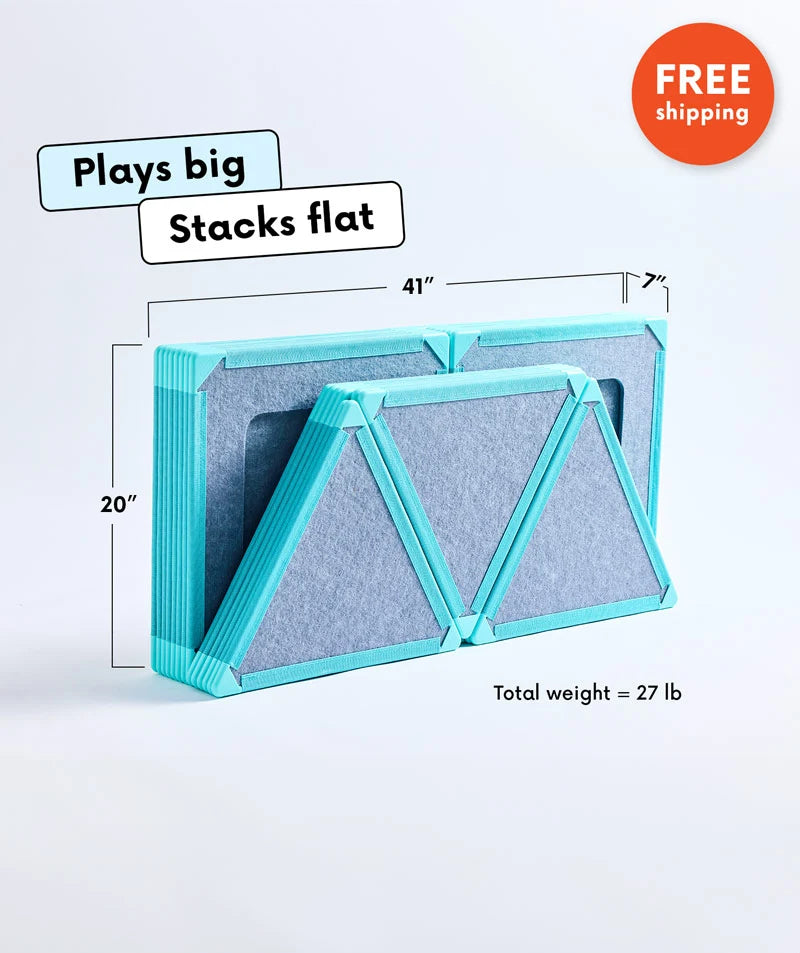
Second, it is built to last. A single plastic bottle can take up to 450 years to break down in landfill, so keeping that plastic in a durable toy matters [8]. Eco-felt panels do not crack or crumble, wipe clean, and fold flat for storage, so one set survives years of heavy play.
Third, it is endlessly open-ended. Because the life-sized panels build forts, tunnels, shops, and rockets that kids can climb inside, a single set becomes hundreds of creations, which means families need far fewer toys overall. This is the open-ended, child-led play the American Academy of Pediatrics highlights for building creativity and executive function [7].
For younger builders, the Superspace Little Set is a great starting point. You can read the full story behind the material on the Superspace sustainability page, or see how it fits your family in our parent buying guide.

Small Swaps That Cut Plastic Toy Waste for Good
Plastic toy waste can feel like a huge problem, but the fix starts with the very next toy you choose. Every durable, recycled-material toy is one less pile of virgin plastic destined for landfill.
You do not have to be perfect. Buy a little less, choose better materials, keep good toys in circulation, and let open-ended play do the heavy lifting.
Whenever you are ready to start, swap one throwaway toy for something built to last, like a set of Superspace. For more research-backed play ideas, explore the Superspace Play Magazine.
Frequently Asked Questions
Are plastic toys bad for the environment?
Yes. The toy industry is the most plastic-intensive industry in the world, and nearly 80% of toys end up in landfills, incinerators, or the ocean [2][3]. Most plastic toys are made from virgin fossil fuels, are hard to recycle, and can take hundreds of years to break down.
What are eco-friendly toys made of?
Eco-friendly toys are typically made from recycled plastics like recycled PET bottles, sustainably sourced or FSC-certified wood, organic cotton, or other renewable materials. The best options pair recycled or renewable materials with durability and open-ended play so one toy lasts for years.
Are wooden toys or recycled plastic toys better for the environment?
Both beat virgin plastic. FSC-certified wood is renewable and biodegradable, while recycled plastic diverts existing waste and uses less energy than new plastic. What matters most is durability and open-endedness, since a toy that lasts for years and replaces many others has the smallest footprint.
What are the best eco-friendly toys for kids?
Look for open-ended, durable toys made from recycled or renewable materials, such as recycled-plastic building sets, FSC-certified wooden blocks, and open-ended construction toys. Superspace giant magnetic tiles are made from recycled PET bottles and offer hundreds of life-sized builds, so one set replaces many single-use toys.
How can I reduce plastic toy waste at home?
Buy fewer, better toys, choose recycled or renewable materials with real certifications, and keep toys in circulation by donating, handing down, or buying second-hand. Avoid cheap novelty plastic toys that break or bore quickly, since those are the ones that fill landfills.
What is Superspace eco-felt made from?
Superspace panels are made from eco-felt, a durable material spun from recycled plastic PET bottles. It takes about 130 recycled bottles to make one Big Set, and Superspace has repurposed over 7 million bottles to date. The material is certified to the Global Recycled Standard [8].
Are recycled plastic toys safe for children?
Reputable recycled-plastic toys are made to the same safety standards as any quality toy and are often certified, for example the Global Recycled Standard for recycled content and CE or CPSIA for child safety. Always check for recognized certifications and buy from trusted brands.
How can I teach my kids about reducing plastic waste?
Start small. Skip single-use plastic toys and party favors, choose one durable open-ended toy instead of several cheap ones, and involve kids in donating toys they have outgrown. Talking about where plastic goes, whether during Plastic Free July or any month, turns it into a lasting family habit.
References
- OECD (2022). "Global Plastics Outlook: Economic Drivers, Environmental Impacts and Policy Options." OECD Publishing, Paris. https://www.oecd.org/en/publications/global-plastics-outlook
- Yale Environment Review (2023). "Most materials are recyclable, so why can't children's toys be sustainable?" Yale University. https://environment-review.yale.edu/most-materials-are-recyclable-so-why-cant-childrens-toys-be-sustainable
- Beyond Plastics (2026). "Plastic Toys: A Potential Risk to Children's Health and the Environment." Bennington College. https://www.beyondplastics.org/fact-sheets/plastic-toys
- United Nations Environment Programme, as reported in analyses of toy-industry plastic intensity (~40 tonnes of plastic per one million dollars of revenue), corroborated by Yale Environment Review (2023). https://environment-review.yale.edu/most-materials-are-recyclable-so-why-cant-childrens-toys-be-sustainable
- Jambeck, J. R., et al. (2015). "Plastic waste inputs from land into the ocean." Science, 347(6223), 768-771. https://doi.org/10.1126/science.1260352
- Dauch, C., Imwalle, M., Ocasio, B., & Metz, A. E. (2018). "The influence of the number of toys in the environment on toddlers' play." Infant Behavior and Development, 50, 78-87. https://doi.org/10.1016/j.infbeh.2017.11.005
- Yogman, M., Garner, A., Hutchinson, J., Hirsh-Pasek, K., Golinkoff, R. M., & AAP Committee on Psychosocial Aspects of Child and Family Health (2018). "The Power of Play: A Pediatric Role in Enhancing Development in Young Children." Pediatrics, 142(3), e20182058. https://doi.org/10.1542/peds.2018-2058
- Superspace (2026). "Sustainability: Eco-Friendly Toys Made from Recycled Bottles." https://www.getsuperspace.com/pages/sustainability