Sensory Play and Structured Literacy: How Kids Actually Learn to Read
Becky WilsonYour child knows every letter of the alphabet. They can sing the ABC song in their sleep. But when it comes to actually reading words on a page, something isn't clicking.
You're not alone. The gap between knowing letters and reading fluently leaves millions of parents wondering what they're missing.
Research reveals that children don't learn to read with their eyes alone. When reading instruction is both structured and sensory, they build the neural connections needed for reading confidence [1].
Tools like Superspace create immersive, hands-on environments where literacy concepts become physical experiences, bridging structured instruction and full-body learning.

Key Takeaways
- Structured literacy teaches children the explicit code of written language through systematic, evidence-based instruction.
- Sensory play creates stronger neural pathways by engaging sight, sound, touch, and movement simultaneously.
- The science of reading confirms that multisensory instruction improves decoding, fluency, and comprehension.
- Children who learn through multiple senses retain information longer and stay more engaged [5].
- Parents can support reading development at home by combining structured phonics practice with hands-on sensory activities.
- Physical play environments like Superspace bridge the gap between structured literacy instruction and full-body sensory learning.
Table of Contents
- What Is Structured Literacy?
- Why Sensory Play Matters for Reading Development
- How Multisensory Learning Strengthens Reading Skills
- Superspace: Where Structure Meets Sensory Play
- Practical Multisensory Reading Activities for Parents
- Supporting Every Reader: From Struggling to Thriving
- Reading Is a Full-Body Experience
- References
What Is Structured Literacy?
Structured literacy is an evidence-based approach to teaching reading that explicitly and systematically shows children how written language works.
Rather than hoping children will absorb reading through exposure to books, structured literacy teaches the actual code behind the English language, including sounds, letters, syllables, word parts, sentence structure, and meaning [7].
The approach is built on four core principles.
It's explicit, meaning teachers directly explain each concept rather than expecting children to figure it out on their own.
It's systematic, following a logical sequence from simple to complex.
It's cumulative, with each lesson building on previously mastered skills.
And it's diagnostic, adjusting instruction based on what each child needs.
The International Dyslexia Association endorses structured literacy as the most effective framework for teaching reading, and decades of research in the science of reading support this position [7].
What makes structured literacy different from other methods is its insistence on teaching the code first.
Children learn what words mean, but more importantly, they learn how words work. Instead of asking children to memorize whole words or guess from context, structured literacy breaks the English language into learnable, logical pieces and teaches each piece explicitly.
This approach benefits every child, not just those with reading difficulties.
When the foundation is strong, fluency and comprehension follow naturally.
Parents looking for ways to bring this kind of hands-on learning into everyday life will find that structured literacy pairs powerfully with sensory play.

The Five Pillars of Reading
The National Reading Panel identified five essential components of reading instruction. These pillars form the backbone of any effective structured literacy program.
Phonemic awareness is the ability to hear and manipulate individual sounds in spoken words.
Phonics connects those sounds to written letters and patterns.
Vocabulary builds understanding of word meanings.
Fluency develops the ability to read with accuracy, speed, and expression.
Comprehension ties everything together, allowing children to understand and interpret what they read.
Scarborough's Reading Rope model provides a helpful visual for how these skills interweave.
Word recognition skills and language comprehension skills twist together like the strands of a rope, and both must be strong for reading to feel effortless.
How Structured Literacy Differs from Other Approaches
Not all reading instruction is created equal. Understanding what sets structured literacy apart helps parents recognize what to look for in their child's education.
Whole language approaches immerse children in books and expect them to learn reading through context and guessing. Balanced literacy blends methods but often teaches phonics inconsistently or incidentally.
The three-cueing system encourages children to use pictures and context clues instead of sounding out words.
Structured literacy takes a fundamentally different path. It teaches the alphabetic code directly, systematically, and explicitly.
Children never have to guess. They are given the tools to decode any word they encounter, building independence and confidence with each new skill mastered.
A randomized controlled trial by Lindstrom-Sandahl and colleagues compared explicit phonics instruction with traditional reading methods.
After just nine weeks, students receiving direct code-based instruction showed significantly stronger decoding and comprehension skills [3].
The evidence is clear. When children are taught how the code works rather than asked to guess, they become stronger readers.

Why Sensory Play Matters for Reading Development
If structured literacy gives children the roadmap to reading, sensory play gives them the landmarks that make the journey memorable. The two are not separate worlds. They are deeply connected, and understanding that connection changes how parents can support their child's reading development at home.
Sensory play is far more than fun and games. It builds the neural architecture that later supports literacy. Children who engage their bodies while learning create stronger, more reliable memory pathways than those who rely on sight and sound alone [4].
This is why a child who traces letters in sand while saying each sound will often remember that letter faster than one who simply looks at a flashcard. The body remembers what the eyes forget. For parents exploring the role of sensory play toys in learning, reading is one of the most impactful areas to focus on.
What Is Sensory Input?
Sensory input is how the brain receives and processes information from the world. Sight, sound, touch, movement, and balance all feed into the brain's ability to learn, focus, and form memories. In early childhood, these sensory systems are developing rapidly, and they play a direct role in how children absorb language and literacy.
When a child traces a textured letter while saying the sound aloud, they are creating a multi-modal memory pathway. The touch of the surface, the movement of the hand, the sound of the voice, and the sight of the letter all encode the same piece of information through different channels.
This matters for reading because the brain creates redundant pathways to the same knowledge. If one pathway is weak on a given day, others can compensate.
Practical examples of sensory-based literacy bring this concept to life:
- Tracing letters on textured surfaces while saying each sound aloud
- Using rhythm and clapping games to build phonemic awareness
- Building words with physical tiles to connect sight, touch, and hearing
- Taking movement breaks that help regulate focus before reading sessions
- Walking the shape of letters on the floor to build body awareness of letter forms
Each of these activities engages at least two senses simultaneously, creating the layered memory encoding that single-sense instruction simply cannot match.
The Brain Science Behind Multisensory Learning
When children engage multiple senses at the same time, something powerful happens in the brain.
Different regions activate simultaneously, and the connections between them grow stronger with each repetition [5].
This is not abstract theory. A comparative study by Fan, Zhang, and Li found that children who played with multi-sensory educational materials showed greater engagement and longer attention spans than those using traditional, single-sense tools [5].
Kucirkova's research on "sensory reading" describes how children connect meaning to text through multiple sensory channels.
When they trace, hear, or move while learning, they build deeper comprehension and stronger orthographic mapping, the process of storing words in long-term memory for instant recognition [4].
Rich sensory environments also build the language foundations that structured literacy later formalizes.
Research by Finders, Rutz, and Rowe found that environments filled with conversation, sound, and movement strengthen vocabulary and communication skills, both essential prerequisites for reading success [6].
For parents, the takeaway is straightforward. The more senses your child engages while learning to read, the stronger and more durable those reading skills become.

How Multisensory Learning Strengthens Reading Skills
Understanding the brain science is helpful, but parents want to know exactly how multisensory approaches improve specific reading skills.
The answer lies in how the body supports each of the five pillars of reading.
Every pillar benefits from sensory engagement. Here is how movement, touch, and full-body interaction strengthen the specific skills children need to become confident readers.
Phonemic Awareness Through Movement
Phonemic awareness, the ability to hear and manipulate individual sounds, is the foundation of reading. Children who struggle here often struggle everywhere in literacy.
Movement makes sound boundaries physical and concrete. When a child claps each syllable, taps out phonemes on their fingers, or jumps for each sound in a word, they feel the structure of language in their bodies.
Rhythmic activities are particularly effective. Marching to syllable beats, stomping for stressed syllables, or using whole-body movement to segment sounds gives children a kinesthetic anchor for what would otherwise be an invisible, abstract concept. This connection between gross motor development and learning is one that parents can encourage through active, physical play.
Building Orthographic Mapping with Touch
Orthographic mapping is the process by which children store words in long-term memory so they can recognize them instantly. It requires connecting the sounds of a word to its letter patterns.
Touch accelerates this process. Tracing letters in sand, forming words with magnetic tiles, building letters with blocks, and writing on textured surfaces all create tactile memories that reinforce what the eyes see and the ears hear.
Whole-arm letter formation is especially effective for young learners. Using large, sweeping movements to form letters on vertical surfaces engages the shoulder, arm, and hand together, building the motor memory that supports handwriting and letter recognition simultaneously.
Supporting Comprehension Through Sensory Calm
Comprehension, the ultimate goal of reading, requires sustained attention and focus. A child whose nervous system is dysregulated will struggle to process meaning, regardless of how well they can decode individual words.
Sensory-rich environments help children self-regulate. Movement breaks between reading sessions, calm sensory spaces for focused reading time, and physical play that releases excess energy all contribute to a child's ability to sit, focus, and comprehend [2].
Research by Potier Watkins and Dehaene found that structured phonics activities delivered through engaging, playful formats produced stronger outcomes than traditional drill-based instruction. The play element was not a distraction. It was a catalyst [2].
For children who need additional support with focus and regulation, executive functioning through play offers meaningful strategies that complement reading instruction.

Superspace: Where Structure Meets Sensory Play
Most reading instruction happens at a desk, on a screen, or in a workbook. But what if the same literacy concepts could come alive in three dimensions, engaging a child's entire body in the learning process?
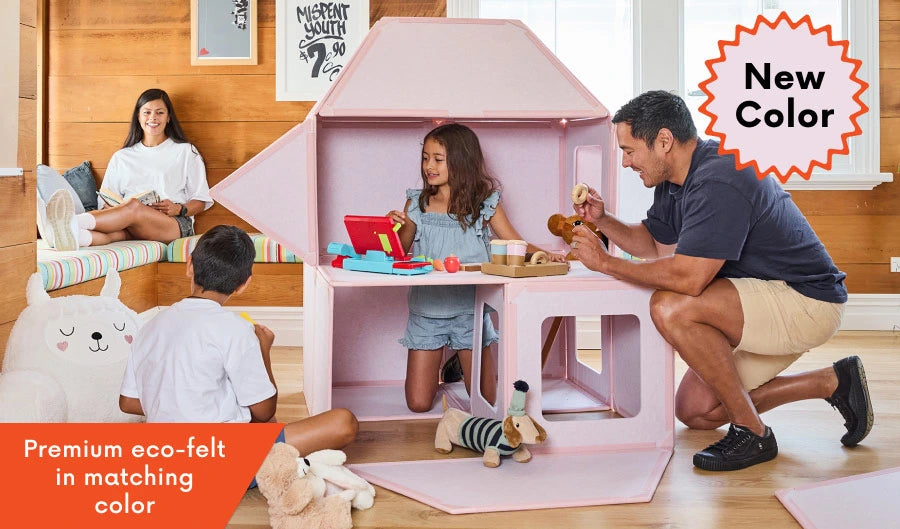
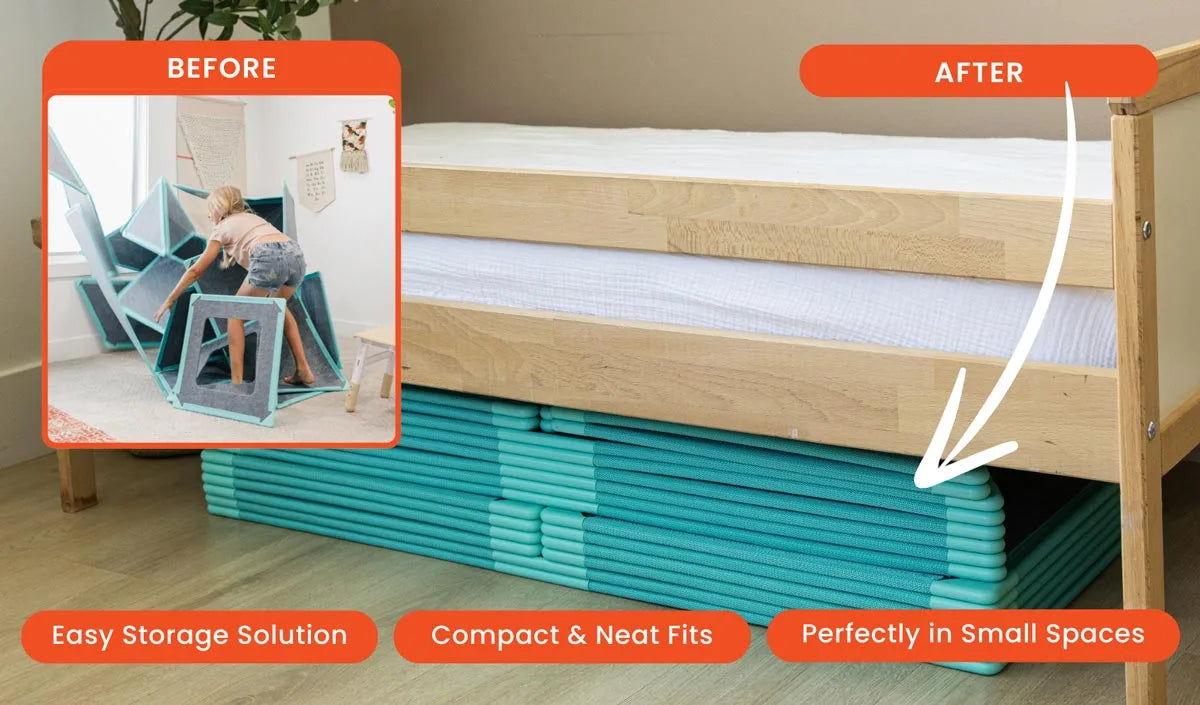
This is where Superspace enters the picture. Superspace panels create immersive, buildable environments where literacy concepts become physical experiences. Every panel, curve, and corner invites movement, touch, and imagination, exactly the ingredients that research identifies as essential for strong reading development.
Educators are already using Superspace to support structured literacy in classroom settings. The Superspace for Educators team has documented how teachers build literacy-rich environments using the panels, creating spaces where the science of reading meets hands-on, full-body engagement.
For parents, the same principles apply at home. Superspace transforms any room into a sensory-rich learning environment where reading practice feels like play.
Creating Literacy-Rich Play Environments
The versatility of Superspace panels opens up creative possibilities for building literacy into everyday play. Here are specific ways parents can use the panels to support reading development.
Build a "sound wall" by displaying letter cards or phoneme charts on Superspace panels. Children can walk up to each sound, trace it, and say it aloud, turning phonics practice into a full-body activity.
Create three-dimensional word structures that children can walk into and explore. Imagine a Superspace tunnel where sight words line the interior walls, or a fort where each room represents a different vowel sound.
Design cozy reading corners using Superspace panels to create enclosed, calming spaces. These sensory-calm environments help children regulate their nervous systems and focus on comprehension during read-aloud time.
Use vertical Superspace surfaces for letter practice. Writing on vertical surfaces strengthens the shoulder stability and motor planning needed for handwriting while crossing into spatial reasoning, a skill that directly supports reading.
Set up letter scavenger hunts within Superspace builds. Hide magnetic letters or word cards throughout a structure and challenge children to find, identify, and build words from their discoveries. This kind of creative play reinforces literacy skills while keeping the experience exciting and exploratory.
The Vertical Play Connection to Reading
The link between vertical play and reading may not be immediately obvious, but the cognitive connections are significant. Superspace's emphasis on building and climbing on vertical surfaces strengthens several skills that directly support literacy.
Spatial reasoning helps children differentiate visually similar letters like b and d, p and q. Children who have strong spatial awareness make fewer letter reversal errors. This is one of the most common early reading challenges parents notice, and it often resolves as spatial skills develop through active, physical play.
Vertical movement strengthens motor planning and sequencing, the same cognitive systems used for understanding reading order and directionality. The left-to-right, top-to-bottom tracking required for reading parallels the physical sequencing children practice when building vertically. Children who regularly engage in constructive play develop stronger awareness of order, position, and spatial relationships.
Climbing, reaching, and building also strengthen focus and sustained attention. These are the same executive functioning skills developed through vertical play that allow a child to sit with a book and follow a story from beginning to end.

Practical Multisensory Reading Activities for Parents
Research and theory are essential, but parents need practical ideas they can use today. The following activities bring multisensory reading to life at home, organized by age group and developmental stage.
Every activity on this list combines at least two senses with a core literacy skill. No special training or expensive materials are required. Just a willingness to let reading get a little messy, a little loud, and a lot more fun than a worksheet.
Ages 3-5: Foundation Building
At this stage, the focus is on phonemic awareness and letter recognition, the building blocks that structured literacy will later formalize.
Create alphabet sensory bins by filling a container with rice, sand, or dried beans and hiding plastic letters inside. Children search for letters by touch, name each one, and practice the sound it makes.
Set up a sand or salt tray for letter tracing. Spread a thin layer of salt on a cookie sheet and have your child trace letters with their finger while saying the corresponding sound. The tactile feedback strengthens the connection between the letter shape and its sound.
Play rhyming games with movement. For each word that rhymes, your child jumps, claps, or spins. The physical action anchors the auditory pattern.
Build letters using Superspace panels or blocks.
Forming a giant letter A with panels and then walking its shape gives children a full-body understanding of letter structure. This approach aligns with the Montessori philosophy of learning through purposeful, hands-on exploration.
Read stories with props. Acting out key words and scenes from a story builds vocabulary and comprehension through embodied experience.
Ages 5-8: Strengthening the Code
As children move into formal reading instruction, multisensory activities should align with decoding, fluency, and comprehension development.
Build words with magnetic letters or letter tiles on a vertical surface. Rearranging physical letters while sounding out each combination reinforces the phonics patterns taught in structured literacy programs.
Practice tapping out phonemes on fingers while reading new words. Each finger represents a sound, making the abstract process of decoding visible and tactile.
Create word walls on vertical surfaces using sticky notes, magnetic letters, or cards attached to Superspace panels. Grouping words by spelling pattern helps children see the code's underlying structure.
Read aloud while walking, bouncing on a ball, or swinging.
The gentle rhythmic movement helps regulate the nervous system, and many children who struggle to focus while sitting still become more fluent readers in motion.
Build vocabulary through imaginative play scenarios.
Use Superspace structures as the setting for stories and have children act out new vocabulary words within their builds. This kind of open-ended play strengthens both language skills and creative thinking.

Supporting Every Reader: From Struggling to Thriving
If your child is struggling with reading, you are not failing them.
Many bright, capable children need more time, different approaches, or additional support to crack the reading code, and that is completely normal.
Some signs may indicate your child needs extra help:
- Avoiding reading or becoming anxious when asked to read aloud
- Frequently guessing at words based on pictures or first letters
- Difficulty sounding out unfamiliar words, even simple ones
- Reading the same passage multiple times without remembering it
- Frustration, tears, or shutting down during reading tasks
- Confusing similar-looking letters well past the typical age
Structured literacy was originally designed for children with dyslexia and other reading difficulties, and it remains the gold standard for these learners.
The International Dyslexia Association specifically recommends structured literacy because of its explicit, systematic approach to teaching the code.
Multisensory instruction is especially powerful for struggling readers because it creates alternative neural pathways. When one processing route is difficult, engaging additional senses provides backup channels for the same information [8].
A scoping review by Solichah and Fardana found that multisensory programs engaging visual, auditory, and kinesthetic modalities produced stronger literacy outcomes across diverse learner populations, confirming that this approach benefits every child regardless of ability level [8].
If your child continues to struggle despite consistent practice, consider seeking an evaluation from a reading specialist or occupational therapist.
Early intervention makes a significant difference, and there is no shame in getting expert support.
For children who also face challenges with focus and attention, multisensory play therapy can provide valuable complementary support.
The most important thing you can do right now is keep reading positive. Celebrate progress, no matter how small.
Replace frustrating worksheet sessions with sensory-rich, low-pressure activities that make reading feel like an adventure rather than a chore. Read together, build together, and play together.
These shared experiences build both literacy skills and the emotional safety that children need to take risks as learners.
With the right approach, patience, and a willingness to let learning happen through the whole body, every child can become a confident reader.

Reading Is a Full-Body Experience
Learning to read is not just an exercise for the eyes and brain. It is a sensory, physical, and deeply embodied experience.
Structured literacy gives children the code they need to unlock written language. Sensory play makes that code memorable, meaningful, and joyful.
The research is clear. When children engage their whole bodies in the learning process, they build stronger readers. From phonemic awareness through movement to comprehension through calm focus, every sense plays a role in the journey to literacy [1] [4].
Whether through hands-on activities at home, sensory-rich play environments, or physical building with Superspace, parents have the power to give their children the tools they need to read with confidence. The journey to literacy starts with play, and every small step counts.
References
- Gillon, G. T., et al. (2024). Better Start Literacy Approach: Scaling up Structured Literacy across schools in New Zealand. Frontiers in Education, 9, 1356880. https://betterstartapproach.com/content/dam/better-start/documents/pdfs/Data-Update-November-2023.pdf.coredownload.pdf
- Potier Watkins, C., & Dehaene, S. (2023). Can a tablet game that boosts kindergarten phonics knowledge also boost reading fluency? Cross-over study of phonics-based reading games in kindergarten classrooms. The Journal of Experimental Education, 91(5), 981-1002. https://excellolab.org/wp-content/uploads/2025/06/Potier-Watkins-et-Dehaene-2023-Can-a-Tablet-Game-That-Boosts-Kindergarten-Phonics.pdf
- Lindstrom-Sandahl, B., et al. (2023). Effectiveness of explicit phonics intervention for early struggling readers: A randomized controlled trial. Dyslexia, 29(3), 330-348. https://doi.org/10.1002/dys.1756
- Kucirkova, N. (2024). Sensory reading: The explanatory power of sensory reading for early reading and literacy. Journal of Early Childhood Literacy. https://doi.org/10.1177/14639491221116915
- Fan, X., Zhang, H., & Li, Y. (2024). A comparative study of multi-sensory and traditional toys in child education. Frontiers in Education, 9, 1182660. https://doi.org/10.3389/feduc.2024.1182660
- Finders, J., Rutz, C., & Rowe, D. W. (2023). Early childhood education language environments. Frontiers in Psychology, 14, 1202819. https://doi.org/10.3389/fpsyg.2023.1202819
- Spear-Swerling, L. (2019). Structured literacy and typical literacy practices: Understanding differences to create instructional opportunities. Teaching Exceptional Children, 51(4), 261-271. https://doi.org/10.1177/0040059917750160
- Solichah, N., & Fardana, N. A. (2024). Exploring multisensory programs as early literacy interventions: A scoping review. International Conference on Research in Education. http://repository.uin-malang.ac.id/20304/